



Introduction:
Cash back credit cards allow you to earn money back on everyday purchases. This guide explains how cash back works, highlights key features to compare and helps you choose a card that fits your spending habits so you can get the most value from your cash back.
This guide is designed to help you understand, compare and maximize cash back credit cards.
Key Takeaways:
- Cash back credit cards reward you with a percentage of eligible purchases. RBC's cash back cards offer earning rates typically fall between 0.5% and 3%, based on a base rate and/or bonus categories, though rates may be higher with promotional offers.
- Choosing the right card depends on your spending habits: flat-rate for simplicity or tiered for focused category spending.
- Cash back cards can maximize reward retention when you pay your balance in full monthly, as unpaid balances may incur interest that arguably diminishes the value of earned cash back. One way to optimize earnings is to ensure cash back earnings exceed annual fees and review terms for limits for features, activation requirements, and redemption thresholds.
- Smart management turns everyday purchases into consistent returns: To maximize your cash back, track bonus categories, and monitor spending limits.

What is a cash back credit card?
- A cash back credit card is a type of credit card that returns a percentage of eligible purchases as cash back.
- Some cash back credit cards offer more cash back on certain purchases, while others offer a flat rate across every purchase type.
- If your account is active and in good standing, you can earn cash back on qualifying purchases, making these cards a popular option for people who want straightforward cash back on everyday spending.
- In short: Cash back cards return a percentage of what you spend.
How is cash back earned?
Cash back is earned when you make eligible purchases with your cash back credit card.
Each purchase earns cash back based on the card’s cash back rate, which is the percentage of the purchase amount that is returned to you as a reward.
For example, an $80 purchase with a 2% earn rate would return $1.60 in cash back
$80 × 0.02 = $1.60
RBC cash back credit cards offer rates that typically range from up to 0.5% to 3%, depending on the card and the type of purchase, though some cards occasionally feature promotional offers with even higher returns for a limited time.
“Eligible purchases” generally include everyday spending such as groceries, gas, dining, or online shopping, while certain transactions like cash advances, balance transfers, or fees usually do not earn cash back.
Many cash back cards use a combination of a base rate and bonus categories.
- Base Rate: the standard cash back rate that applies to most purchases. This rate is typically 1%, though it can range from 0.5% to 2% depending on the card's fee structure.
- Bonus Categories: specific types of spending such as groceries, gas, dining, or travel that earn a higher cash back rate (between 1.5-5% depending on the issuer)

| Purchase Type | Cash Back Rate | Example Purchase | Cash Back Earned |
|---|---|---|---|
|
Everyday purchases |
1% base rate |
$100 |
$1.00 |
|
Grocery Stores/Dining |
3% bonus rate |
$100 |
$3.00 |
To better understand how to calculate cash back on credit cards at RBC, you can use our Cash Back Calculator to estimate potential cash back based on how you use your card.

To sum it up:
Cash back is earned by applying your card’s cash back rate to eligible purchases, allowing you to receive a percentage of what you spend.How is cash back posted and redeemed?
After you make eligible purchases, RBC automatically tracks the cash back you earn. Most cards calculate cash back at the end of each billing cycle and post the earned amount to your monthly statement or online account portal. You can easily check your RBC cash back balance on your monthly statement, or check it anytime through RBC Online Banking.
Some credit cards automatically apply cash back as a statement credit, reducing your outstanding balance. Others allow you to choose when and how to redeem your cash back once they become available, such as applying them as a statement credit or redeeming them as a direct deposit into a linked bank account.
How to redeem RBC cash back:
- Request a credit to your credit card account once your cash back balance hits $25 or more and RBC will issue the credit within 5 business days
OR
- Wait for it to be automatically credited to your account in January each year (if your cash back balance exceeds $25)
In short, here’s how cash back is earned, posted and redeemed:
- Make eligible purchases with your cash back credit card
- Earn cash back on each purchase based on your card’s cash back rate
- Check your cash back balance on your monthly statement or through RBC Online Banking
- Cash out your cash back any time you reach $25
OR
Let your balance add up all year for cash back redeemed automatically on your account in January
Types of cash back credit cards

FLAT-RATE CASH BACK CARDS
- Offer the same percentage back on every eligible purchase, regardless of the spending category
- Usually offer between 1% and 2% cash back on all purchases
- Are simple to use and require minimal tracking, because every purchase earns the same rate

TIERED CASH BACK CARDS
- Offer higher cash back rates in bonus categories, such as groceries, gas, or dining, and a lower base rate on all other purchases (For example, a card might offer 3% on groceries and gas, and 1% on everything else)
- Can benefit cardholders who consistently spend more in certain categories
| Card Type | Example Rate | Key Features | Best For |
|---|---|---|---|
|
Flat-rate cash back |
0.5-2% on all purchases |
Simple structure; all eligible purchases earn the same rate |
Straightforward spending |
|
Tiered cash back |
1.5-5% in select purchases |
Higher rates in specific cash back categories; base rate elsewhere |
Targeted spenders |
Use the chart below to see which type of cash back credit card may best match your spending habits and preferences to help choose the right cash back card for you.
| If this sounds like you… | Consider this card type | Why it fits |
|---|---|---|
|
I want the simplest option |
Flat-rate cash back |
One consistent rate on everything |
|
I don’t want to think about categories |
Flat-rate cash back |
No tracking required |
|
I want consistency without surprises |
Flat-rate or tiered cash back |
Predictable earning structure as outlined by the bank |
|
I want more cash back where I spend most |
Tiered cash back |
Extra earnings in key areas |
|
I want the highest earning potential |
Tiered cash back |
Elevated rates depending on purchases made |
|
I have significant purchases in groceries, gas or dining |
Tiered cash back |
Higher earn rate on everyday categories |
In short:
Cash back credit cards generally fall into two categories: flat-rate and tiered. Both offer different ways to earn cash back based on spending patterns.Are cash back credit cards worth it?
Cash back credit cards can offer real value, but only if you understand the key rules to consider. The right card can help you earn cash back on everyday purchases, but fees, interest, and program limits can reduce or even outweigh those benefits.
Here’s what to evaluate before choosing a card:
1. DOES THE CASH BACK OUTWEIGH THE ANNUAL FEE?
Some cards with higher cash back rates (especially in bonus categories) charge an annual fee.
Ask yourself:
- How much do I realistically spend in high-reward categories?
- How much cash back would I earn in a year?
- Does that amount exceed the annual fee?
Simple formula:
Estimated yearly cash back – Annual fee = Net value
If the result is low (or negative), the card may not be worth the cost.
2. WILL YOU CARRY A BALANCE?
Cash back is usually modest compared to credit card interest rates.
- If you pay your balance in full each month, cash back can provide net value.
- If you carry a balance, interest charges may outweigh the cash back you earn.
In most cases, cash back cards work best for cardholders who avoid interest by paying in full.
3. DO YOUR PURCHASES QUALIFY?
Not every transaction earns cash back.
Credit card issuers use merchant category codes (MCCs), standardized codes that classify businesses by industry, to determine which purchases qualify for base or bonus categories.
This means:
A purchase only earns base or bonus cash back if the merchant is coded in that category.
Some transactions typically do not earn cash back, including:
- Cash advances
- Balance transfers
- Fees and interest charges
- E-transfers
Understanding how purchases are categorized can help prevent missed earnings.
4. ARE THE PROGRAM LIMITS A CREDIT CARD CLIENT CONCERN?
Before applying, review the fine print for:
- Spending caps on bonus categories if applicable. Some cards may have spending caps while others, like RBC’s Cash Back cards, offer unlimited cash back with no spend caps.
- Minimum redemption thresholds (for example, $25 before cashing out)
- Promotional periods or offer expiry dates
These details can affect how you earn and collect your cash back.
At a glance, cash back credit cards are worth it if:
- You pay in full
- You earn more in cash back than the annual fee
- You understand program limits
How to choose the right cash back credit card
Choosing the right cash back credit card doesn’t have to feel overwhelming. By focusing on your personal spending habits and financial goals, you can narrow down your options and select a card that maximizes cash back.
STEP 1: ANALYZE YOUR SPENDING
Start by reviewing two to three months of past purchases. Break your spending into categories such as:
-
 Groceries
-
 Dining and takeout
-
 Gas, EV Charging, ridesharing, and transportation
-
 Online shopping
-
 Travel and entertainment
You can use our Cash Back Calculator for an estimate on how much cash back you could earn in a year based on your monthly spending.
Understanding where you spend the most helps you identify which type of cash back card will reward you the most.
STEP 2: MATCH CARD TYPE TO YOUR SPENDING PATTERNS
| Spending pattern | Best card type | Why? |
|---|---|---|
|
Spread across categories |
Flat-rate cash back |
Earn a regular percentage on eligible purchases with minimal tracking |
|
Heavy spending in a few categories |
Tiered cash back |
Maximize cash back in bonus categories like grocery, gas or dining |
STEP 3: COMPARE COSTS AND CASH BACK
Once you’ve narrowed your options, evaluate the financial details:
- Total expected cash back: Estimate your annual cash back based on your spending patterns
- Annual fees: Compare the fee to projected cash back to determine net value
- Sign-up bonuses: Consider whether introductory offers align with your short-term spending
- Caps and limits: Review spending caps, bonus category restrictions and minimum redemption thresholds
Browse our full lineup of RBC credit cards to explore our current offers.

Mini Checklist Before Applying:
Following this step-by-step approach makes it easier to select a cash back card that fits your lifestyle, without getting overwhelmed by too many options.
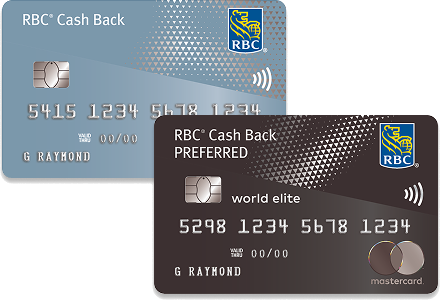
Interested in learning about RBC’s cash back credit card offerings? Use the chart below to compare options:
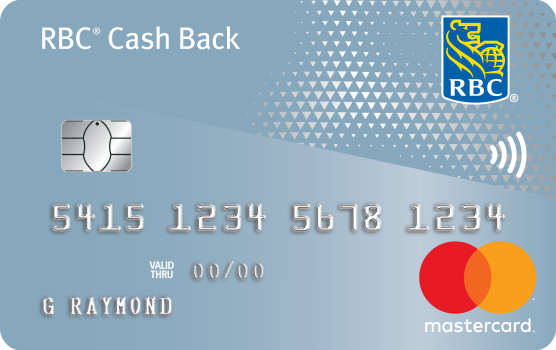 RBC Cash Back Mastercard
|
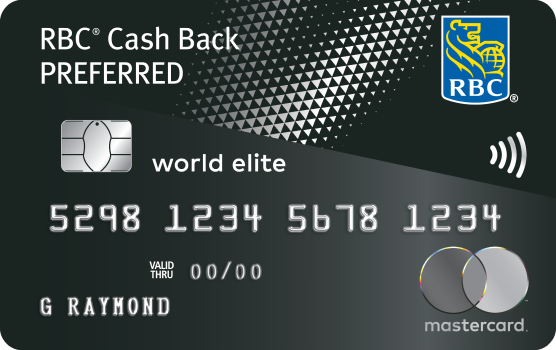 RBC Cash Back Preferred World Elite Mastercard
|
|
|---|---|---|
|
Annual fee* *subject to issuer increases |
$0 for primary cardholder |
$120 for primary cardholder
$50 for additional card holder |
| Cash back structure |
Tiered cash back |
Tiered cash back |
|
Typical cash back rate* *subject to issuer increases |
2% on groceries1; 1% on gas1, EV charging, rideshare and transit; 0.5% on other purchases with no spending cap1 |
3% on groceries, dining, gas, EV charging, rideshare, transit, streaming and digital gaming3; 1% on all other purchases with no spending cap3 |
| Best for |
Everyday spending with no fee |
Maximized cash back in popular everyday categories |
Interested in a cash back credit card for business? Discover the RBC Business Cash Back Mastercard and review Cash Back Program Terms and Conditions (open in a new window)
In short:
Choosing the right cash back credit card starts with analyzing your spending habits and matching them to a card structure that maximizes your cash back.How to maximize cash back and use your card effectively
Understanding how to maximize cash back credit cards starts with building the right habits early. Cash back credit cards can deliver meaningful long-term value, but only when they’re managed intentionally. By combining smart setup, disciplined payments and strategic spending, you can increase cash back while avoiding common pitfalls.

Set Up and Monitor Your Account Properly
Start strong from day one:
- Activate your card as soon as it arrives
- Enroll in online or mobile banking (such as Royal Bank of Canada Online or Mobile Banking, if applicable)
- Set up alerts for autopay, e-statements, and payment reminders for due dates and spending thresholds
Ongoing monitoring is just as important. Pay close attention to:
- Accelerated category spending
- Spending caps on bonus categories (if applicable)
- Minimum redemption thresholds (for example, $25 before cashing out)

Pay Your Balance in Full and On Time
If you’re wondering how to get more cash back on credit cards, the answer isn’t just about earning more, it’s also about minimizing interest by paying your statement balance in full every month on or before your due date.
Interest charges on carried balances can quickly outweigh the value of your cash back. Paying in full ensures your cash back remains a net gain rather than being offset by charges.

Use the Card Strategically
Maximizing cash back comes down to intentional spending:
- Use your card for everyday eligible purchases
- Prioritize spending in bonus categories
- Time larger planned purchases to align with elevated cash back periods
- Stay aware of promotional limits and category caps (if applicable)

Redeem Cash Back Regularly
Subject to any limits, redeeming your cash back once it becomes available may allow you to actively benefit from your earnings.
With RBC, you can redeem your rewards as a statement credit. At RBC, cash back credits might be cancelled and purged if the cardholder does not earn any cash back credits in 3 consecutive years.
Quick Best Practices Checklist:
The Bottom Line:
Learning how to maximize cash back credit cards and how to get more cash back on credit cards doesn’t require complex tactics. It comes down to staying organized, paying in full, tracking program rules and spending intentionally. With consistent management and attention to detail, your cash back credit card can become a simple and powerful tool for earning value on everyday purchases.Conclusion
Used responsibly, a cash back credit card can be a simple and effective way to earn value on everyday spending while supporting your overall financial goals.
FAQs about cash back credit cards
CAN YOU GET CASH BACK ON A CREDIT CARD?
Yes, you can get cash back on a credit card, but it’s important to understand the difference between cash back (rewards) and cash back (debit) / cash advance. Cash back (rewards) are earned when you make eligible purchases, giving you a percentage back that can usually be redeemed as a statement credit, direct deposit, gift card or travel. In contrast, debit card cash back at checkout simply allows you to withdraw your own money from your bank account. A cash advance is different as well: it lets you borrow cash from your credit line, often with high fees and interest, and it does not earn cash back. In short, credit card cash back is an incentive for spending, not borrowed funds.
IS CREDIT CARD CASH BACK TAXABLE IN CANADAS?
In most cases, cash back is earned from personal spending are not considered taxable income in Canada. It is generally treated as a rebate or discount on your purchases rather than earned income. However, tax treatment may differ if cash back is earned through business spending or promotional incentives. For specific guidance related to your situation, consider consulting a qualified tax professional.
WHAT ARE THE DOWNSIDES OF CASH BACK CARDS?
Cash back credit cards can offer solid value, but they come with potential trade-offs. Carrying a balance can lead to interest charges that outweigh your cash back reward value, and some higher-earning cards charge annual fees. Many cards also place spending caps on bonus categories, require activation for rotating offers or set minimum redemption thresholds. If interest or fees exceed the cash back you earn, the overall value of the card can quickly diminish.
WHAT ARE COMMON CASH BACK MISTAKES TO AVOID?
Common cash back mistakes include carrying a balance and paying interest, forgetting to activate bonus categories, overlooking spending caps, opening too many cards just to let cash back sit unused. Cash back cards typically work best for people who pay their balance in full, keep track of program details, and redeem cash back strategically to maximize value.
WHAT’S THE DIFFERENCE BETWEEN A CASH BACK AND A REWARDS CREDIT CARD?
When comparing a cash back vs rewards credit card, the key difference is how you earn and redeem rewards. A cash back card returns a percentage of eligible purchases as cash, typically offering simple, predictable value that can be redeemed as a statement credit, direct deposit or similar cash equivalent. A rewards credit card earns points or miles instead, which can often be redeemed for travel, gift cards, merchandise or other options, with the value varying based on how you redeem them. Cash back cards generally appeal to those who prefer simplicity and flexibility, while rewards cards may offer greater potential value for frequent travelers or those willing to strategically manage their redemptions.
Share This Article





This article is intended as general information only and is not to be relied upon as constituting legal, financial or other professional advice. A professional advisor should be consulted regarding your specific situation. The information presented is believed to be factual and up-to-date but we do not guarantee its accuracy and it should not be regarded as a complete analysis of the subjects discussed. All expressions of opinion reflect the judgment of the authors as of the date of publication and are subject to change. No endorsement of any third parties or their advice, opinions, information, products or services is expressly given or implied by Royal Bank of Canada or any of its affiliates.