

 EN
EN
 Click to share on X (Opens in new window)
Tweet
Click to share on X (Opens in new window)
Tweet
 Click to share on Facebook (Opens in new window)
Post
Click to share on Facebook (Opens in new window)
Post
 Click to share on LinkedIn (Opens in new window)
Share
Click to share on LinkedIn (Opens in new window)
Share
 Email
Email

TLDR
- Is it better to buy or sell first? That depends on your personal financial situation: selling first offers more financial certainty, while buying first gives you more time to find the perfect home.
- If you buy before you sell, what is bridge financing? It’s a short-term loan used to cover the financial gap between the time of sale of one home and the purchase of another home.
- Buying first takes careful financial planning, as you may need to manage making payments for two sets of bills and mortgages simultaneously until your original home sells.
- Beyond the mortgage, you need to account for the timing of cashflow for home improvements and moving costs.
- Market conditions play a role in deciding whether you’ll likely sell your home fast or face a longer wait that could stretch your finances.
- Before making a final decision, consider consulting with a mortgage advisor to understand your unique financial situation and the specific lending options available to you.
Whether you’re looking to downsize, move to a new neighbourhood or create room for a growing family, buying and selling a home is one of the biggest financial and lifestyle decisions you can make. The sheer number of considerations at play can be overwhelming. One of the biggest decisions is whether to sell your home before you buy or wait until you have purchased your dream home to list.
With so many factors to consider, from the impact of market conditions to your individual preferences and risk tolerance, this guide will help you take the next step in making the big decision—should you buy or sell your house first—with confidence.
Note: The following sections provide the pros and cons of different approaches to buying or selling a house first, but ultimately, your decision depends on your unique financial circumstances. Everyone is different. Be sure to speak with a mortgage and real estate professional(s) before deciding on the best option for you.
Should you buy or sell first? The pros and cons
| Pros of buying first | Cons of buying first | |
|---|---|---|
| Finance | You set the pace and can take all the time you need to find the perfect home. | It’s much riskier. If it takes longer to sell your current home, you may have two mortgages, assuming you get approved for a second mortgage, and paying two sets of bills until you can sell your current home. However, if you have a bill of sale for your current home and are just waiting for it to close, then there are “bridge loans”, a common practice, available with your lender. |
| Timing | You have more time to make home improvements to prepare your home for sale and hopefully increase your sale price. | It may be tough to pay for closing and moving costs if you can’t draw on the proceeds of your previous home because it hasn’t sold yet. |
| Cashflow | If market conditions remain stable or shift toward a seller’s market from the time you list to the time you sell, you may pocket more profit than you expected. But remember that you’re also competing to buy in that same hot market, which means paying premium prices. | If market conditions shift to favour buyers from the time you list to the time you sell, you may get a good deal on a new property, but you may struggle to get your asking price. In that case, you may need to go to an alternate lender who charges much higher interest rates. |
| You can move directly into your new home with no need for temporary housing. | Your cashflow may be tight until your current home sells, if you’ve put most of your liquid assets toward the down payment on the new one. |
| Pros of selling first | Cons of selling first | |
|---|---|---|
| Finance | Financial certainty. Based on the proceeds from the sale, you’ll know exactly what your available cashflow will be. | Pressure to buy quickly as your closing date nears. |
| Timing | You can buy strategically by waiting for prices to drop or market conditions to shift from a seller’s market to a buyer’s market before your purchase. | To buy strategically, you have to be very tapped into what the market is doing in your area of interest. |
| Cashflow | Less stress and financial strain with only one mortgage at a time. No “bridge loans” are required. | The cost and hassle of securing temporary housing and storage if the closing dates for your current and new home don’t align. |
How market conditions shape your decision to buy or sell
Understanding your local market conditions is important when deciding whether to buy or sell first. The housing market, like most markets, is cyclical and can be influenced by a host of factors, including consumer confidence, economic conditions and interest rates, all of which can contribute to a shortage or surplus in housing. “Your REALTOR‡ is well positioned to help you determine if current market conditions will help or hinder your sale,” said Garry Bhaura, Chair of the Canadian Real Estate Association (CREA). “REALTORS‡ are active in local real estate markets and know what types of properties are selling or not, and current market trends to help sellers achieve their goals.”
Seller’s market
A seller’s market is the time period when the buyers’ demand exceeds housing supply, making the market competitive. For this reason, buying a new home first is often the wisest strategy. Because competition is fierce when sellers have the upper hand, securing the home you want right away eliminates the pressure to win a bidding war or settle for a less desirable home. Since your current home is more likely to sell quickly, you’ll have peace of mind knowing you’ve secured your next living arrangement.
Buyer’s market
A buyers’ market is when the number of homes for sale exceeds buyer demand. Since housing surpluses can slow rising prices or even lead to price reductions, your home may take longer to sell. Selling first in these conditions lets you avoid the financial risk of having to carry two properties. Locking in your sale price before you buy is especially beneficial if prices in your desired neighbourhood are in flux. You may end up spending less when you purchase because money in the bank lets you move quickly on aggressively priced listings.
Balanced market
A balanced market is when the ratio of homes for sale and buyers is relatively equal. In this case, the deciding factor for whether you buy or sell first is your own level of comfort and financial preparedness.
To understand what type of market you are entering, consult with a trusted realtor or mortgage advisor.
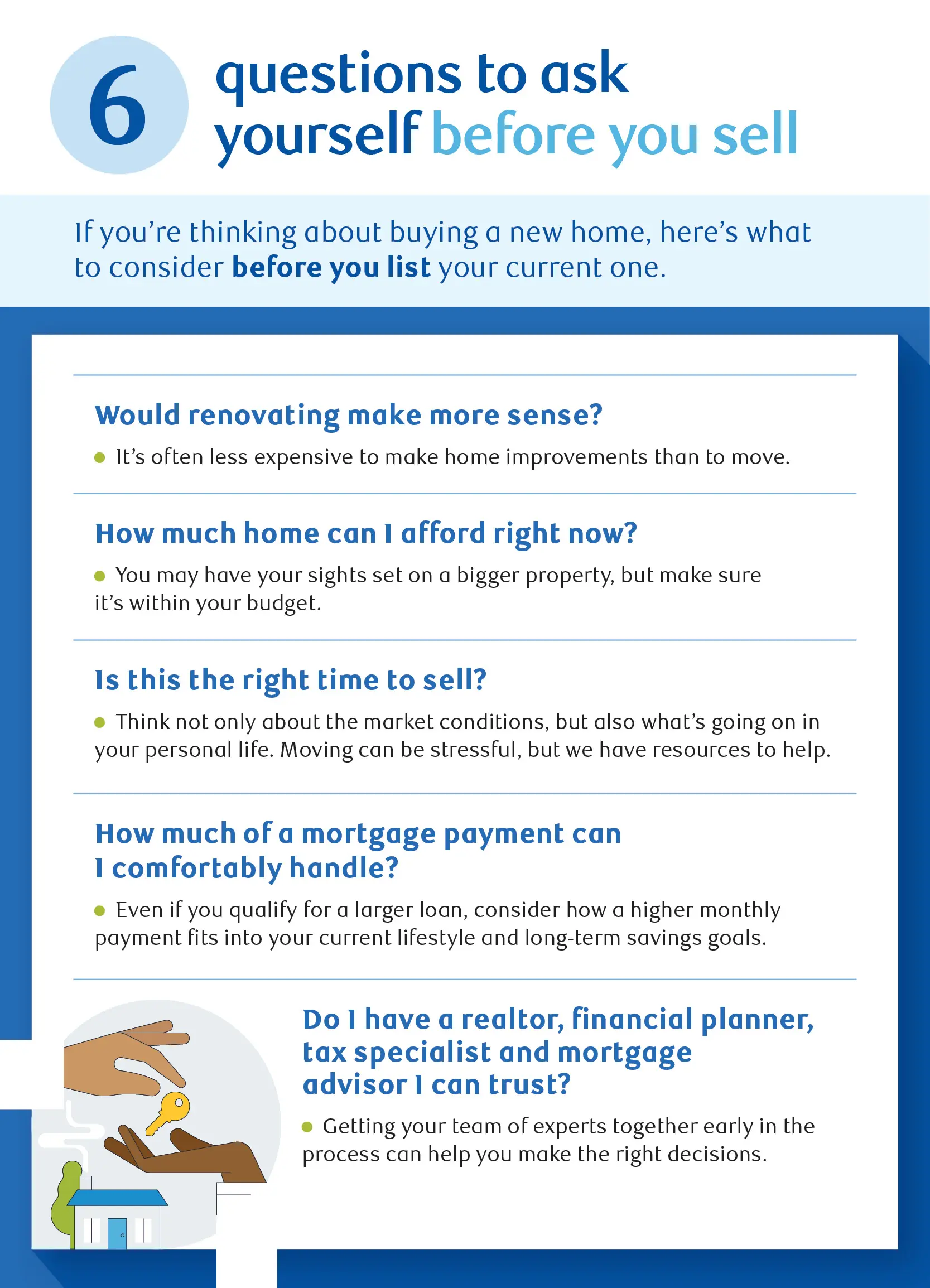
6 questions to ask yourself before you sell
If you’re thinking about buying a new home, here’s what to consider before you list your current one.
-
Would renovating make more sense? Should I renovate or should I buy?
It’s often less expensive to make home improvements than to move.
-
How much home can I afford right now?
You may have your sights set on a bigger property, but make sure it’s within your budget.
-
Is this the right time to sell?
Think not only about the market conditions, but also what’s going on in your personal life. It can be stressful, but we have resources to help.
-
Is my home ready to sell?
Making improvements may increase your property’s value.
-
How much of a mortgage payment can I comfortably handle?
Even if you qualify for a larger loan, consider how a higher monthly payment fits into your current lifestyle and long-term savings goals.
-
Do I have a realtor, financial planner, tax specialist and mortgage advisor I can trust?
Getting your team of experts together early in your home buying and selling journey can help you make the right decisions. “Buying or selling a home is one of life’s biggest financial decisions anyone can take, and a REALTOR‡ is a professional you want on your team,” said Bhaura. “REALTORS‡ are provincially licenced experts, who have the knowledge, skills and network to guide you through this process from start to finish.”
6 home improvements that may increase home value
You may be asking yourself, “How do I sell my old home fast?” But before you take that step, you’ll also want to think about how to get the best price possible. “Sometimes it pays to invest a little bit to get higher offers. At minimum, fresh paint will help your home display its best features and improve curb appeal,” explained Bhaura. “Alternatively, it may be beneficial for sellers to consider certain repairs or renovations prior to listing to address issues buyers will notice such as older windows and doors, or larger surfaces such as roofing materials. A little investment up front can result in better offers, less negotiation to address buyers’ concerns and help sell a property faster.”
Before you list your home, consider one or more of these appraiser-approved ideas:
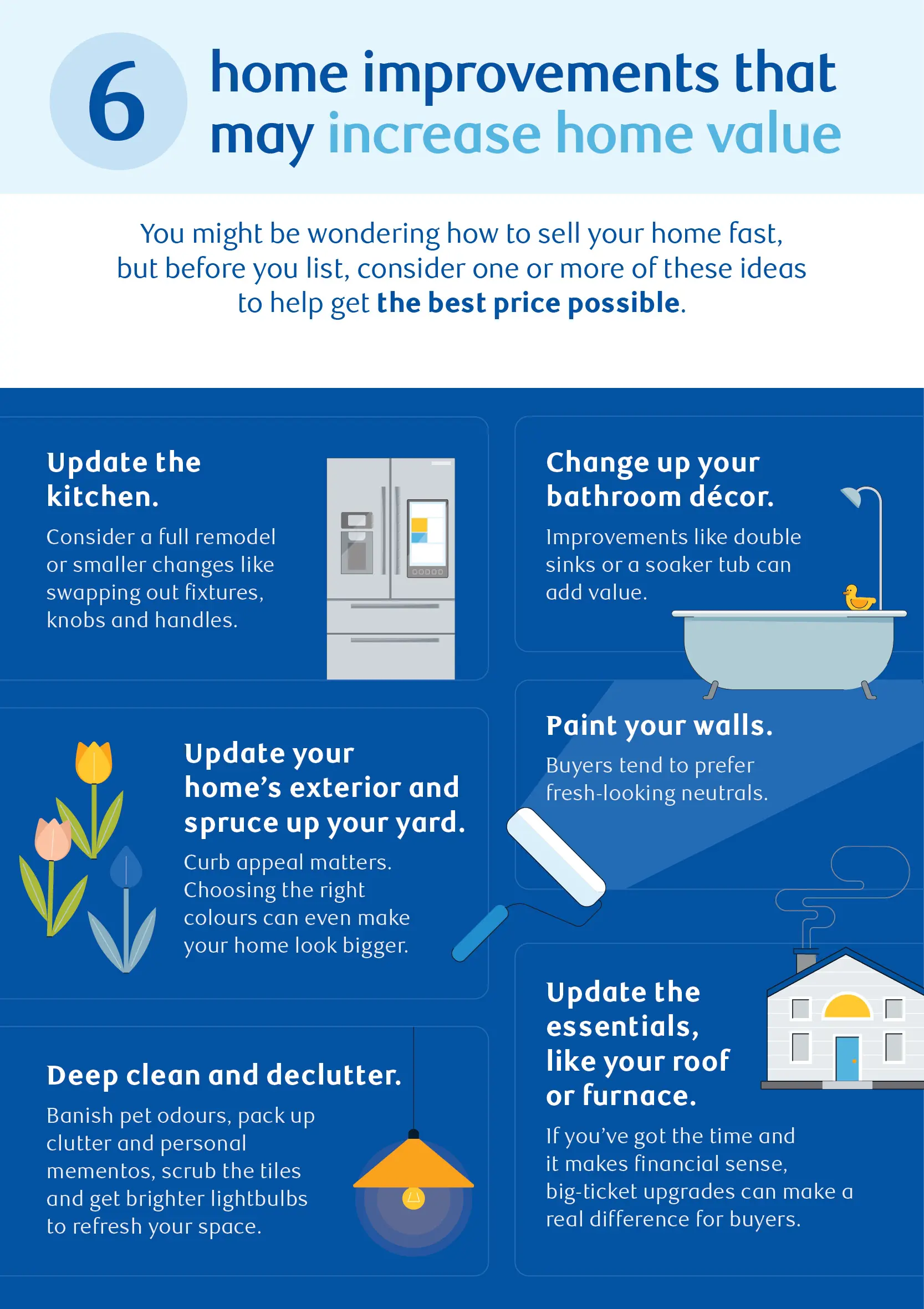
- Update your kitchen. Consider a full remodel or even small changes like swapping out fixtures, knobs and handles.
- Change up your bathroom décor. Improvements like double sinks or a soaker tub add value.
- Paint your walls. It’s a low-cost update and buyers tend to prefer fresh-looking neutrals.
- Update your home’s exterior and spruce up your yard. Curb appeal matters and choosing the right colours can even make your home look bigger.
- Update the essentials, like your roof or furnace. If you’ve got the time and it makes financial sense, big-ticket upgrades can make a real difference for buyers.
- Deep clean and declutter. Banish pet odours, pack up the clutter and personal mementos, scrub the tiles and get brighter lightbulbs to refresh your space.
How bridge financing can help you
A bridge loan covers the timing gap when your new home closes before your old one sells. Here’s how it works.
What is bridge financing?
Bridge financing helps cover the financial gap between the time of sale of one home and the purchase of another home. How does bridge financing work? In a nutshell, it allows you to use the equity in your current home while you wait for it to sell, helping to avoid the stress of overlapping closing costs.
Bridge financing terms
The typical term of a bridge loan is six months, but it can be as short as 90 days or as long as 12 months or more. To qualify, you’ll need a firm agreement of sale for your existing home.
What to consider before using a bridge loan
The terms, costs and conditions can vary widely with this type of financing. Interest rates for bridge financing tend to be higher than those for mortgages, so you’ll need to factor this into your budget.
Consulting a mortgage advisor is the best way to learn about the benefits and risks of bridge loans as they apply to your unique situation.
Financial impact of buying and selling a home
While no one has a crystal ball when it comes to real estate transactions, having a strong sense of your potential budget is possible with some careful estimating and calculations. Use this guide to identify and calculate potential moving costs and financial obligations.
- Estimate your net proceeds of sale. Your estimated sale price, minus costs and fees such as realtor commissions and land transfer tax. To help determine what your home may sell for, you can use the RBC Home Value Estimator.
- Break down the purchase costs for your new home. Your deposit, down payment, mortgage, closing fees, insurance and maintenance costs. You may also want to budget for property taxes and utilities.
- Determine potential monthly overlap costs. How much will it cost to carry two mortgages? How much is storage, and how much will it cost you to move twice?
- Figure out the opportunity cost of your equity. If you have extra cash from the proceeds of your sale, consider consulting with a financial advisor to determine how to use the additional funds.
Smart tips to make your home transition easier
Whether you choose to buy or sell your house first, there are a few strategies you can leverage to save money and make things go more smoothly.
- Consult an experienced mortgage professional. This is critical to understanding your financial position and avoiding spending more than you can afford.
- Get pre-approved for financing early. Your mortgage advisor can assist you with this essential step, so you have a clear picture of what you can afford before you list your home or make any offers. You can get your mortgage pre-approval online, you can know your rate in minutes and there’s no credit score impact.
- Negotiate flexible closing dates. This is ideal because it allows you to only move once and you won’t require bridge financing. But depending on the housing market, it might not always be possible.
- Have backup housing plans. If the closing dates of your current and new homes don’t line up, it’s important to know where you’ll stay, whether that’s staying with friends and family or securing a short-term rental.
Non-financial factors: How to balance lifestyle and finances
Moving is a highly personal decision with lots of emotions attached. Your family may love the house they have and may not want to leave your current neighbourhood. If staying local is a priority, then your search parameters will be limited, but when you find “the one,” it will be worth it.
Where you live can make a huge difference in your health and happiness, so losing easy access to neighbourhood friends, your child’s school or local healthcare, amenities and services can be a deal-breaker for some. On the other hand, you may be motivated to explore somewhere new as your lifestyle evolves.
Your personal priorities and comfort zone are the two most important non-financial factors when it comes to selling and buying a home. Whether you are daunted by the headache and stress associated with moving, or eager to escape the burden of caring for a larger home or paying high condo fees, there’s no one-size-fits-all formula. In the end, your decision will depend on your personal and financial comfort, your housing needs and the current real estate market.
Plan your next move wisely
Selling your home and purchasing a new one is a huge investment, both financially and emotionally. By asking yourself tough questions and seeking expert guidance, you can gain clarity on whether it’s time to make the move, as well as the best way to approach it.
If you’re ready to take the exciting next step on your home-buying journey, you could start by getting online mortgage pre-approval to see what your rate would be when considering a new property. Then talk to a mortgage specialist who can guide you through every step, making the process as smooth and stress-free as possible.