



TLDR
-
For businesses facing rising costs, supply chain volatility, and growing customer and regulatory scrutiny, circular end-of-life strategies are emerging as a practical way to reduce cost, manage risk, and improve transparency across operations.
-
Circular business practices aim to extend product lifecycles and keep materials in use as long as possible, extracting maximum value before anything reaches a landfill.
-
This article features insights from Debrand, a Vancouver-based company that partners with fashion and textile brands to help them build circularity into their operations, divert products from landfill, and leverage data to make business decisions.
-
Advice for businesses exploring circularity includes piloting projects before scaling up, recognizing cost and risk exposure across the value chain, and gaining buy-in from leadership and cross-functional departments.
Pull a thread from the linear economy and it unravels into a landfill. Pull one from a circular model and it weaves back into something new. That’s the core idea behind circularity, a strategy gaining traction across industries as companies confront growing costs and scrutiny around end-of-life waste management and emissions across the value chain. The model promises benefits beyond environmental sustainability too, with circularity potentially leading to financial, regulatory and operational opportunities, too.
How does a circular end-of-life model work?
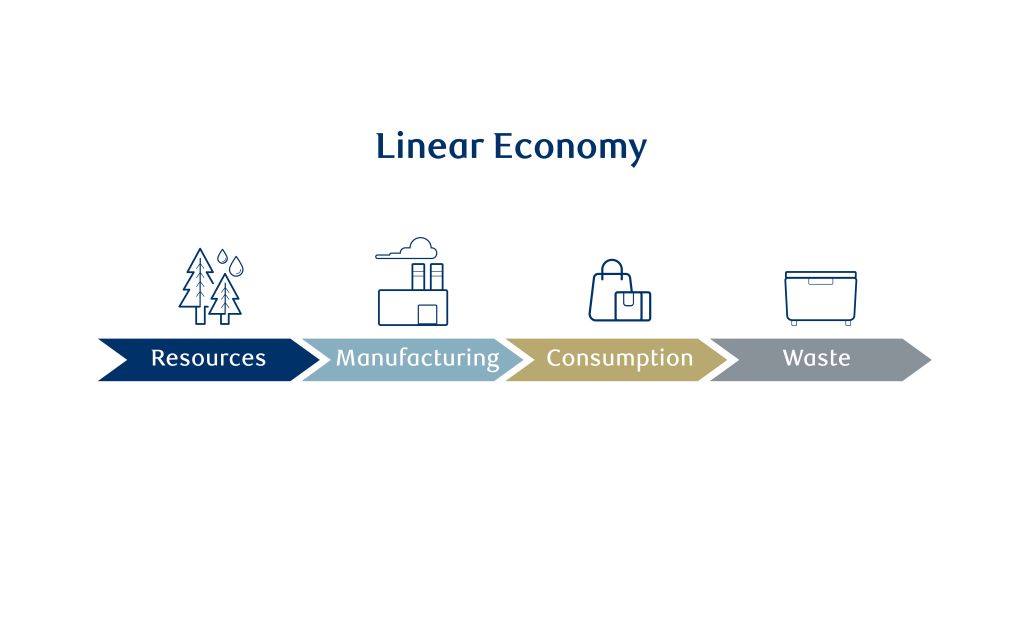
The linear economy follows a “take-make-dispose” model: Raw materials are extracted, products are manufactured and sold, then sent to landfill once they’ve served their purpose.
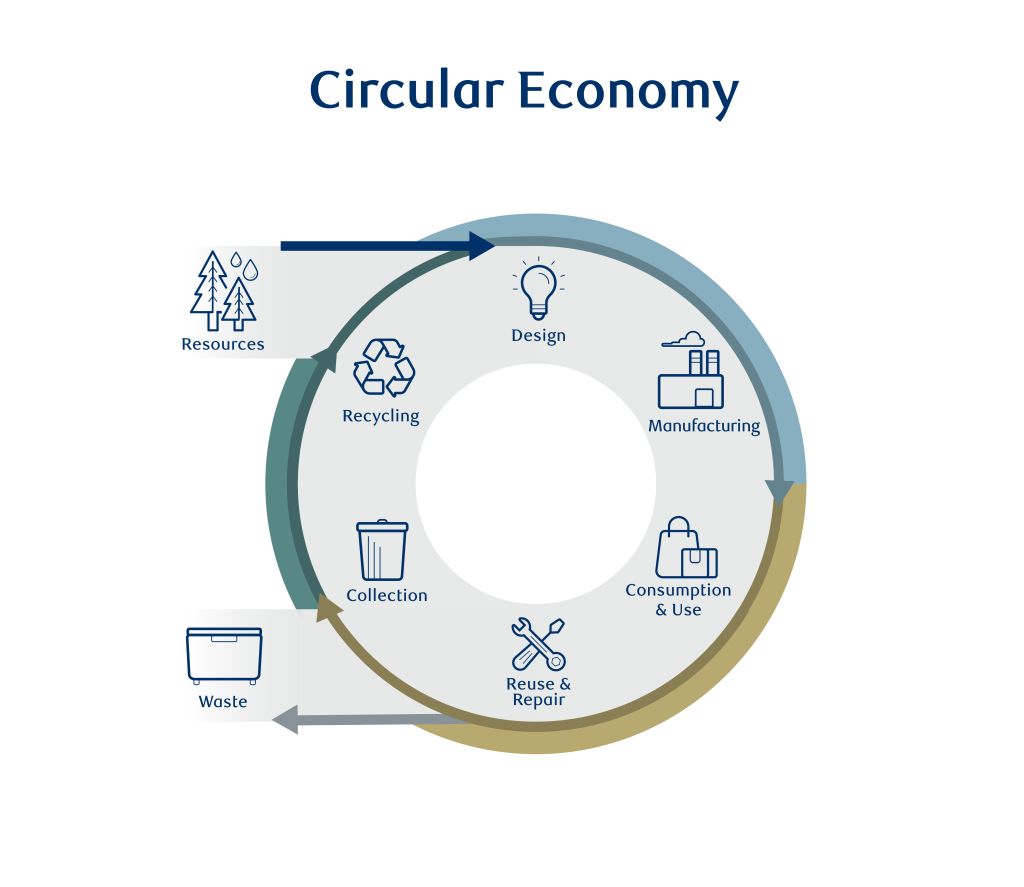
Circular end-of-life strategies flip this approach. Built on the principles of reduce, reuse, repair, remake and recycle, the circular economy is designed to extend product lifecycles and keep materials in productive use as long as possible, extracting maximum value before anything reaches a landfill. But it’s not just about recycling: Commercial businesses may be compelled to shift to a circular end-of-life model to reduce disposal costs, limit write-offs, and gain better insight into where materials, products, and value are lost across the value chain.
The benefits run across the business. Notably, circular models help to reduce Scope 3 emissions—the indirect greenhouse gas (GHG) emissions that occur across a company’s value chain, from raw material extraction to disposal. Unlike emissions from a company’s own operations, Scope 3 typically represents around 90% of a company’s total footprint. It also remains the hardest to measure and control. And while climate reporting isn’t yet mandated in Canada, Scope 3 emissions and waste data are becoming commercially relevant as customers and partners demand greater transparency.
Read more: Emissions explained: Understanding Scope 1, 2 and 3 in your business
There’s also a significant financial opportunity. Accenture estimates that the transition to a circular economy could generate USD $4.5 trillion in additional economic output by 2030. For companies facing supply chain volatility, reusing materials could offer added resilience. As pressure increases to report on GHG emissions and comply with waste regulations like Extended Producer Responsibility (EPR), which is expanding across Canada and the world, circular models could help companies like yours to get ahead.
Circularity in motion: Addressing textile waste in the fashion industry
While businesses across sectors—from manufacturing to consumer goods, building materials and logistics—are feeling the pressures of end-of-life cost, data and risk issues, businesses in the fashion and textiles industry face an acutely complex challenge. The sector currently accounts for eight to 10% of global emissions, and are projected to increase by about 30% by 2030 if current practices continue. Compounding the challenge, supply chains are long, fragmented and notoriously difficult to trace, often spanning multiple countries and dozens of suppliers. Most brands have visibility only into their direct suppliers, while the majority of emissions occur further upstream.
Vancouver-based Debrand is working to change that. The company partners with fashion and apparel brands—including Lululemon, Canada Goose, Aritzia and Victoria’s Secret—to help them build circular practices into their operations, divert products from landfill, and leverage data to make transparent and impactful business decisions. For businesses grappling with where to start, partnerships like these are one path forward.
“Whether the pressure is from the top down or bottom up, brands are going to be facing more and more pressure to respond and act responsibly,” says Melanie Mok, Director of Marketing and Communications at Debrand.

A worker manually sorts through textile waste. Image courtesy of Debrand.
Debrand’s circular end-of-life approach to textile recycling
Debrand sits in what the industry calls the “reverse logistics” or “next-life logistics” space. The company’s role is to sort and route materials to their highest-value destination, whether that’s resale, donation, recycling or, if there are no other options, disposal or waste-to-energy conversion.
The company had its start in 2008 after co-founders Amelia Eleiter and Wes Baker encountered branded plastic waste washing up on shore during a surf trip off the coast of Sri Lanka. That sparked a conversation about brand product responsibility, and from there, Debrand was born. Today, the company operates textile sortation facilities in Surrey, B.C., and Columbus, Ohio, and partners with close to 90 retail brands across Canada and the U.S.
How the process of textile sortation works
Sortation is at the core of Debrand’s operations, and the team modify their approach to align with their partner’s objectives, whether that be resale, donation, advanced recycling, or fibre reclamation. Brands ship pallets of customer returns, damaged items, and/or otherwise unsellable inventory from their distribution centres to Debrand’s facilities, where a combination of automated technology and manual inspection is used to assess the condition and fabric of each item to determine where it goes next.
“We’re here to identify opportunities with the product and provide intel,” says Mok.
Items in good condition can go to resale or donation partners in both Canada and the U.S. For donation, Debrand applies a “donating with dignity” standard, ensuring items are in good enough shape that the next wearer feels proud to use them. Items that don’t qualify for reuse go to the next best high-value channel within recycling or waste-to-energy conversion. When possible, single material fabrics, such as 100% cotton or wool, could be sent to a textile-to-textile recycler to be made into a new fibre. Blended materials often end up in fibre reclamation, where they are shredded into material used for insulation or mattress stuffing.
Some companies are going further, launching take-back programs to collect products directly from end users. United Airlines, for example, recently rolled out new employee uniforms and worked with Debrand to collect the old ones through physical drop-off locations and a mail-in program.

A worker driving a forklift truck sorts through used textiles. Image courtesy of Debrand.
Life cycle assessments: How Debrand measures impact for its partners
A life cycle assessment (LCA) is a standardized method for measuring a product’s environmental footprint, from raw materials to disposal. For instance, one European LCA found that reusing a garment saves more than three kilograms of carbon dioxide compared to producing a new one, with 70 times lower overall environmental impact. For businesses, this kind of credible impact data not only encourages compliance, it also helps them prioritize environmental sustainability decisions and pinpoint emissions sources so supplier conversations are more focused. Beyond that, it gives customers the transparency they increasingly expect.
LCAs are not limited to the fashion industry either, as sectors including building materials, packaging, automotive, and electrics, follow the standards to guide procurement, support product disclosures and respond to rising customer and regulatory scrutiny.
Applying LCAs to textiles is complicated. Value chains are long and globally distributed. Material blends vary widely. Often, companies are challenged by the tools, expertise and budget required to measure their emissions. Even when they do, there’s no industry-wide standard for measuring Scope 3 emissions, making it difficult to compare results or verify accuracy.
“There’s more work to be done to make LCAs more widely applicable to textiles across the supply chain,” says Mok.
Debrand measures impact in units and pounds diverted from landfill, reporting 2.4 million pounds diverted in 2024. After processing, participating companies receive a transparent data report from Debrand detailing where their products ended up. For businesses, credible impact data supports more than compliance. It helps with internal decision-making, makes conversations with suppliers more productive, and provides customers with transparent and reliable insights into progress.
Read more: Value chain analysis in your business’s environmental sustainability strategy
What are the benefits of circular end-of-life programs?
The business benefits of end-of-life programs extend well beyond any single industry or sector. The reasons to embrace them vary, but generally fall into three categories:
1. Risk mitigation in the supply chain
Global supply chains continue to be tested by tariffs, trade wars and geopolitical conflicts, driving up the costs of raw materials and components. Companies that can reuse, refurbish or recycle materials from their own products are often better positioned to manage risk and improve resilience over the long term. “Folks are looking 10 or 20 years ahead, trying to understand how they can de-risk their supply chain,” says Mok.
2. Build brand value and customer loyalty
Consumers increasingly expect companies to take responsibility for what happens to their products after sale. Being able to show responsible end-of-life product management is becoming a factor in purchasing decisions, customer loyalty, and partnerships with retailers and distributors. In addition, take-back programs and brand loyalty reinforce each other, with loyal customers more likely to participate.
3. Inform future design decisions
End-of-life programs can generate useful insights into how products are designed in the first place, and ultimately, how much value they retain. “If a jacket can’t be recycled because the placement of hardware like zippers makes it too cost-prohibitive to process, that’s feedback we can give to the design team so it’s easier to get the most yield from the material,” says Mok.
Whether it’s hardware placement, electronics with hard-to-separate components, or packaging made from mixed materials, designing with circularity in mind can ensure that that are easier to disassemble and recover value from.
Considerations for businesses moving towards a circular business model
For many commercial businesses, the primary hurdle to overcome is not intent, but economics. Questions around upfront costs, capital allocation, and return on investment can often determine whether a circular end-of-life program moves beyond its pilot stage. Before launching a circular end-of-life program, companies should understand the scale of investment required, the biggest of which is cost. “A lot of times, companies think they should get money back for the products. That’s not how it works,” notes Mok.
Considerations include collection logistics, sortation labour, technology infrastructure and partnerships with companies—like Debrand—for end-of-life processing or opting for direct partnerships. For many businesses, these programs raise questions around capital allocation — whether investments sit within operating budgets, capital plans or third-party service arrangements. Increasingly, companies are exploring phased approaches, pilots or financing solutions to manage upfront costs while testing impact before scaling.
For companies accustomed to linear models where unsold inventory is written off, end-of-life management represents a fundamental shift. But as EPR regulations expand, those costs are becoming increasingly unavoidable.
Successful programs also require clear governance internally: Executive sponsorship, defined decision rights and alignment across sustainability, operations, finance, and procurement teams. And as programs scale, digital tools become increasingly important for tracking volumes, destinations and outcomes, supporting both operational management and external reporting.

Products wait on a conveyer belt to be sorted in the factory. Image courtesy of Debrand.
5 steps to help you get started
While there’s no single playbook, Mok shares her recommendations for businesses exploring circularity:
-
Pilot first: Don’t try everything at once. Test what’s possible with targeted pilots focused on high-cost or high-risk product lines, before scaling based on data and results. “You can’t get into the red for absolutely everything you’re doing,” says Mok. “But you can make incremental steps and build feedback loops.”
-
Understand cost and risk exposure: Map where end-of-life products currently create disposal costs, write-offs, or operational risk. This helps prioritize which product lines or geographies offer the strongest business case.
-
Know your materials: Understand what materials and components your products are made of. Different materials have different end-of-life pathways and knowing what you’re working with determines what’s possible. For example, a company that manufactures electronics will develop different processes compared to a timber frame construction company. In fashion, most garments are made using thread that is a blend of three to five different materials, with no standardization across the industry. The result is that most textile recycling is actually “downcycling”—shredding blended fabrics into insulation or rags rather than spinning them back into new clothing.
-
Get cross-functional buy-in: Circularity touches multiple departments, including brand protection, supply chain, operations, product design and communications. “It’s not a siloed part of the business,” says Mok. “It’s a holistic impact that will affect every part of the organization.”
-
Establish governance and ownership: Assign clear executive sponsorship and decision rights to ensure circular initiatives move beyond pilots and align with broader business priorities.
An eye towards the future: Growing regulation and global standards
The regulatory landscape is shifting. The European Union has approved the Ecodesign for Sustainable Products Regulation, introducing new requirements around product durability, repairability and recyclability across multiple sectors. In the United States, several states are rolling out industry-specific EPR frameworks to cover multiple products, including plastics and packaging, batteries and e-waste, mattresses, tires and paint – with more expected to follow. Canada is expected to move in a similar direction, though federal requirements are not yet in place.
While regulations are accelerating globally, many businesses are looking beyond compliance. End-of-life strategies are increasingly viewed as a way to reduce costs, manage risks within the value chain, strengthen customer and partner relationships, and stay ahead of shifting expectations. For businesses navigating uncertainty and competing priorities, circular end-of-life programs offer a chance to turn waste from a cost into something that can be managed and measured – improving operations and reducing risk over time.
The question for commercial business is no longer whether circular end-of-life management matters, but how proactively they choose to address it. As costs, customer expectations and regulations continue to rise, circular strategies offer a way for businesses to turn waste from a liability into a managed and measurable part of the business.
“We want to be in a place where circular principles are embedded into every business,” says Mok. “So that we’re emphasizing the value of the resources we’ve already extracted from our environment.”
Read more: From reactive to proactive: Managing climate-related risk in your business’s value chain
This article is intended as general information only and is not to be relied upon as constituting legal, financial or other professional advice. A professional advisor should be consulted regarding your specific situation. Information presented is believed to be factual and up-to-date but we do not guarantee its accuracy and it should not be regarded as a complete analysis of the subjects discussed. All expressions of opinion reflect the judgment of the authors as of the date of publication and are subject to change. No endorsement of any third parties or their advice, opinions, information, products or services is expressly given or implied by Royal Bank of Canada or any of its affiliates.