

TLDR
-
Modular – or manufactured – homes can be appealing to a wide range of buyers thanks to their affordability, flexibility and speed.
-
Constructed in controlled environments, these homes can be durable, reliable and energy efficient.
-
Homebuyers can fully customize their manufactured home or choose from existing inventory.
-
RBC offers the same financing for permanently affixed manufactured homes as traditionally-built homes, something many lenders don’t do.
Homeownership in Canada is changing – and so is the way some homes are built. A growing number of Canadians are discovering that manufactured and modular homes could offer a more affordable and quicker path to owning a home.
What is a manufactured home?
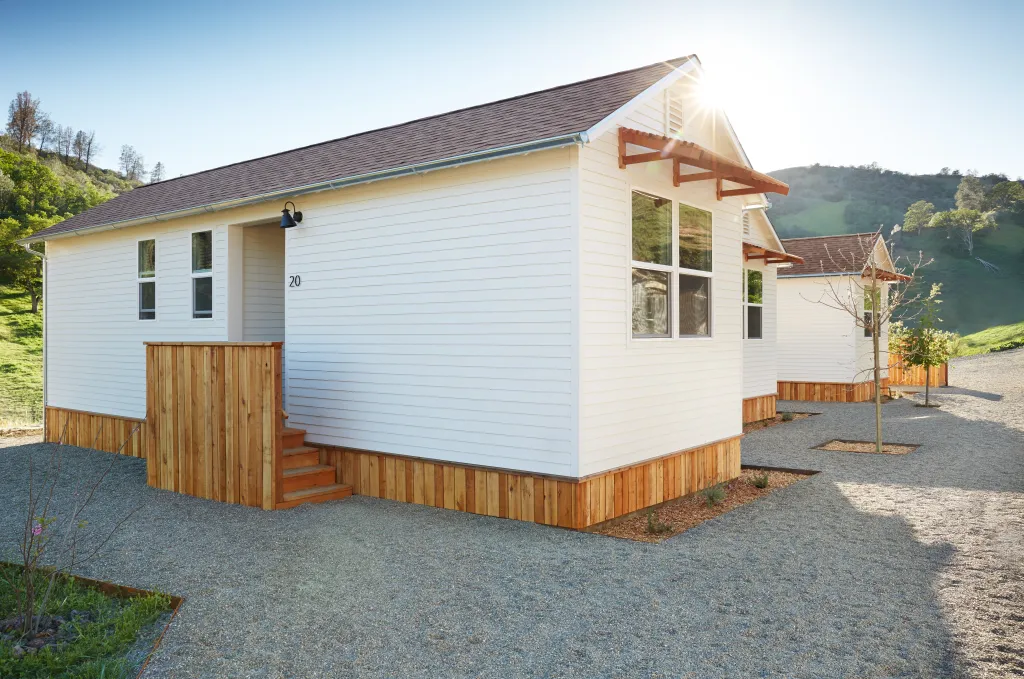
Manufactured homes are prefabricated structures built in a controlled environment, like a factory, and are then shipped and assembled in a new permanent location. They can be customized to individual needs and delivered in a fraction of the time of traditional construction, making homeownership more accessible for a wider range of Canadians. Once seen as a niche option, these homes are now being recognized for what they truly are – practical, quality designs suitable for modern living.
Across the country, municipalities and builders alike are supporting this shift, investing in innovative housing solutions that combine Canadian materials, skilled labour and new technology.
As momentum builds, manufactured housing is emerging as a modern, attainable option, helping Canadians from all walks of life turn the idea of home into something possible, personal and real.
Who buys manufactured homes in Canada and why?
Part of what makes manufactured homes so appealing to some people is their flexibility. Buyers can choose from model layouts or fully customize their design, going as simple or as elaborate as their budget allows.
RBC Mortgage Specialists Debra Clearwater and Suzette Hawkes, who work closely with clients purchasing manufactured homes, say they see interest from various demographics:
First-time home buyers
For younger buyers, the draw is affordability and speed: a new, three-bedroom home can often be purchased for under $200,000 and ready in just a few months. “It’s a fraction of the cost and time of traditional construction,” notes Hawkes.
Empty-nesters and seniors
Retirees are also turning to manufactured homes for comfort and accessibility. Single-level living suits those who prefer to avoid stairs, and many parks offer a ready-made community lifestyle of these homes for seniors.
Multi-generational families
Families are using manufactured homes to bring generations together. As more municipalities across Canada are loosening zoning restrictions, homeowners can build additional units on existing properties. This is creating opportunities for families to add small homes for parents, adult children or caregivers – often on farmland. Hawkes adds that she’s seeing a rise in multigenerational living as families look for ways to stay close while maintaining independence.
Displaced homeowners
Manufactured homes are also providing new beginnings for Canadians affected by natural disasters. A compelling example is a pensioner who lost his home in the 2023 Shuswap fires. When traditional construction couldn’t meet his timeline for rebuilding, he turned to a modular home dealer who then connected him with an RBC Mortgage Specialist. Through the RBC Construction Mortgage Multi-Unit program1, he secured financing and had a manufactured home built within four months—under budget—restoring his independence and providing a fresh start.
Clearwater notes that this type of housing has had a significant impact on those in her region who have been affected by wildfires. “Sometimes it’s very difficult to find a contractor that’s available to rebuild a home. And for families who have been displaced for 12 – 18 months, waiting for a rebuild isn’t feasible. So, I’m seeing a lot of interest coming through for manufactured homes, as they can be built within a few months.”
Are building standards and quality the same as a traditional new build?
Despite their growing popularity, manufactured homes still face outdated perceptions.
As Don Sawatsky, owner of Best Buy Homes, explains, modern manufactured homes bear little resemblance to the “trailers” of decades past. Built with steel frames and constructed indoors to precise standards, they’re engineered for durability, energy efficiency and long-term living.
Sawatsky says building indoors makes a remarkable difference in quality. With no exposure to wind, rain or extreme temperatures, every joint and seam is exact, resulting in stronger, straighter construction. And, without weather-related construction delays, construction can remain on time and on budget.
He advises that homeowners can opt for a fully custom design – often ready in as little as two months – or choose from existing inventory for a faster possession.
“People are often surprised when they walk into a manufactured home,” he says. “They expect something basic or industrial, but what they see is a well-built, modern and stylish space that feels every bit like a traditional home.” Indeed, with a range of finishes that may include stainless steel appliances, marble countertops and smart tech – there is nothing temporary about these homes.
Can you get a mortgage on a manufactured home?
Yes, you can get a mortgage on a manufactured home. In fact, RBC has played a key role in making financing more accessible for buyers. Clearwater notes that RBC offers the same mortgage terms and standards for manufactured homes as for traditional builds – something many lenders don’t do. Through the RBC Construction Mortgage Multi-Unit program, RBC supports a range of scenarios, from homes in modular parks to units built on private or family land.
“RBC has really been able to take the lead in this space,” says Hawkes, who has already helped dozens of families finance manufactured homes this year. Mihai Aldea, Director, Home Equity Financing at RBC, adds that the bank’s commitment goes beyond financing. “We’re helping Canadians finance these properties in a way that supports their goals and fits their stage of life,” he says. “With shorter construction timelines, single-level layouts and energy-efficient designs, manufactured homes can meet a wide range of needs – from first-time buyers to retirees seeking simplicity.”
Housing solutions for Canadians
Manufactured homes are no longer just an alternative – they’re part of the solution to one of Canada’s biggest challenges. Built with precision, delivered quickly and priced accessibly, they’re redefining what’s possible in homeownership.
Sawatsky believes continued education and visibility will help the industry grow. “People need to see these homes for what they are – well-built, efficient and attainable,” he says. “Once they do, the misconceptions will start to fade.”
For families, retirees and first-time buyers alike, manufactured homes are opening new doors across Canada. Speaking with an advisor can help buyers explore the pros and cons and decide if this path is right for them. Because when it comes to finding a place to call your own, anything is possible.
The RBC Construction Mortgage program provides unique financing opportunities to help Canadian homeowners add new housing units to their property, up to a total of six units, whether through redeveloping an existing home into multiple units or building new residential structures.
And, with an in-depth knowledge of construction mortgages, RBC Mortgage Specialists can give you the support you need to guide you through the process of redeveloping your existing home or building something new.
Manufactured Homes FAQs
A manufactured home can be modular (made and assembled from modules) and a modular home can be manufactured (built by people in a factory environment). RBC treats manufactured and modular terms interchangeably and are more broadly known as factory constructed homes or units.
Like a traditional stick-build, on site constructed, home – the price for a manufactured/modular differs between the type of elevation or style chosen, the number of bedrooms, bathrooms, storeys or surface area. Prices can range between $150,000 to more than $700,000.
There are numerous Canadian-based builders who product manufactured homes across most regions. You can see floorplans and prices directly on builder websites or find a retail distributor of those homes where you can walk throughout a manufactured home model and place an offer to purchase on the spot.
We know manufactured homes are appealing to a wide range of buyers thanks to their affordability, flexibility and speed. They are durable, reliable and energy efficient. From those perspectives we believe it is a reasonable bet to invest in these homes.
Some manufactured homes can be ready-to-move (RTM), mobile or mini homes – all which can be moved away from their original location. However, this is a style that was dominant 20 or 30 years ago and no longer prevalent. Most manufactured homes sold today cannot be moved, especially where the consumer choses a complex manufactured home, like a 2-storey property.
Subject to municipal zoning bylaws regarding gentle density, and subject to the eligibility criteria for the RBC Construction Mortgage Multi-Units Program which will be confirmed by your RBC Advisor prior to mortgage approval. Your RBC Advisor can advise on other financing solutions should your project not be eligible under this program.
This article is intended as general information only and is not to be relied upon as constituting legal, financial or other professional advice. A professional advisor should be consulted regarding your specific situation. The information presented is believed to be factual and up-to-date but we do not guarantee its accuracy and it should not be regarded as a complete analysis of the subjects discussed. All expressions of opinion reflect the judgment of the authors as of the date of publication and are subject to change. No endorsement of any third parties or their advice, opinions, information, products, or services is expressly given or implied by Royal Bank of Canada or its affiliates.
® / ™ Trademark(s) of Royal Bank of Canada. RBC and Royal Bank are registered trademarks of Royal Bank of Canada. ‡ All other trademarks are the property of their respective owner(s).
This article is intended as general information only and is not to be relied upon as constituting legal, financial or other professional advice. A professional advisor should be consulted regarding your specific situation. Information presented is believed to be factual and up-to-date but we do not guarantee its accuracy and it should not be regarded as a complete analysis of the subjects discussed. All expressions of opinion reflect the judgment of the authors as of the date of publication and are subject to change. No endorsement of any third parties or their advice, opinions, information, products or services is expressly given or implied by Royal Bank of Canada or any of its affiliates.