


TLDR
Cyber criminals target businesses of all sizes – not just large corporations.
Strong, consistent cyber habits can help reduce your business’s vulnerability.
Being aware of the common scams that are targeting businesses today can make it easier to spot and respond to risks.
Having a recovery and reporting plan can help minimize losses and prevent attacks on other businesses.
In today’s digital-first economy, businesses rely on the internet to serve customers, manage operations and nurture growth. But that connectivity also comes with risk – particularly for small businesses, who may lack the dedicated resources and formal security protocols that larger organization have in place. The good news is, you don’t need to be a tech expert to take action.
With the right cyber hygiene practices, employee training and incident response planning, you can significantly strengthen your defences.
Cyber security basics for business owners
Strong cyber habits form the foundation of business protection. While no system is foolproof, these proactive measures can significantly reduce your vulnerability and help protect your systems, data, customers and reputation:
- Install security tools and keep software updated. The latest anti-virus and anti-malware tools can help guard against malicious attacks. Software updates and security patches are released to fix vulnerabilities.
- Use firewalls and network protection. A Domain Name System (DNS) firewall adds an extra layer of defence against malicious internet traffic. Virtual private networks (VPNs) encrypt data and secure employee access to your business network.
- Strengthen passwords. Requiring login credentials for all employees and accounts can prevent unauthorized access. Update passwords on a routine basis and never share credentials with others.
- Back up data regularly. Consider using secure, off-site storage and maintain both cloud and physical backups. This ensures you can recover critical data should your business be a target of a ransomware or malware attack.
- Limit data sharing and access. Restrict employee access based on role to strengthen control over your data and disable file-sharing features to reduce exposure.
Spotting common scams
Businesses are attractive targets for scammers because they handle valuable data, process large transactions and have multiple points of entry – their employees. Understanding how scams work is one of the most effective ways to prevent them, avoiding serious financial and operational consequences. Here are some of the most common threats targeting businesses:
- Social engineering scams: These scams aim to manipulate staff into sharing confidential information or performing an unauthorized action, often by posing as a colleague, vendor or customer in urgent situations.
- Email scams (phishing): Phishing emails mimic legitimate sources, like suppliers or company leadership, urging recipients to click a malicious links, download an attachment or disclose sensitive information.
- Phone scams (vishing and smishing): Scammers use phone calls or texts to pose as banks, vendors or government officials, creating urgency to extract confidential information like account credentials or payment approvals.
- Bank impersonation scams: Via a call, text or email, attackers pretend to represent your bank and request passwords, authentication codes or emergency transfers in the name of a “security breach” or “account issue” – which legitimate institutions will not do.
- Ransomware: This cyber threat encrypts your data and demands payment to unlock it. Attacks often begin with a phishing email or an infected file. Keep in mind that even if you pay the ransom, the scammer may not unencrypt your data.
- Business and vendor email compromise: Via spoofed or compromised email accounts, attackers impersonate a trusted source, intending to urge someone within a company to send money or reveal confidential information.
Protection and recovery plan
Despite strong prevention practices, incidents can still happen. A clear response plan can reduce chaos and limit damage. Here are some steps your business can take to prepare:
-
Form a cross-functional crisis management team, which includes IT, legal, operations and communications.
-
Define response protocols for common scenarios, such as ransomware or data theft.
-
Develop a communication strategy for clients, vendors, regulators and employees.
Keep in mind, transparency is key. Prompt communication with affected stakeholders can address their concerns and help preserve trust.
Reporting fraud and cyber crime
Timely reporting can limit financial damage and help authorities prevent similar attacks on others. If your business experiences a scam or a cyber incident, here is what to do:
-
Notify your bank. Your bank can help protect your account and prevent further loss. Contacting them right away means any affected cards or accounts can be locked, monitored and replaced quickly.
-
Alert credit reporting agencies. They can place a fraud alert on your file, which makes it harder for someone to open unauthorized accounts in your business’s name.
-
Contact law enforcement and anti-fraud agencies. This can help ensure you get the support your business needs to respond, and it can help them in their criminal investigations.
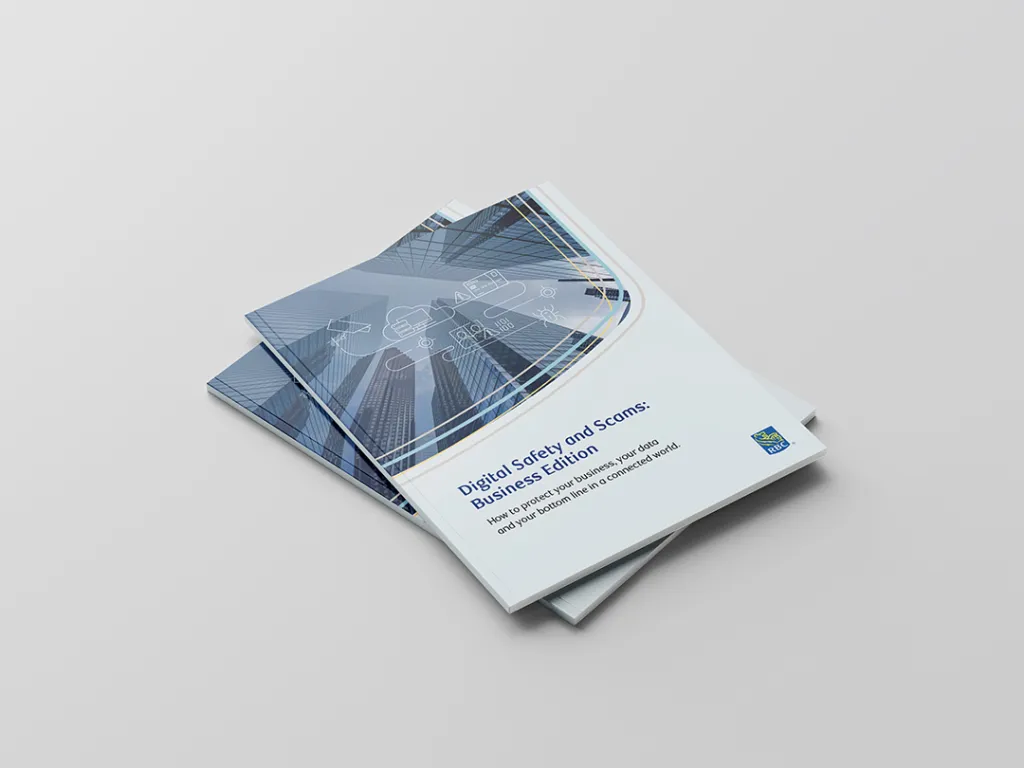
Knowing who to contact – and having those details documented in advance – can save valuable time during a crisis. Our Digital Safety and Scams booklet includes a detailed reporting directory for Canada, the United States and the United Kingdom, along with key banking and credit bureau contacts.
When it comes to cyber incidents, it’s not a matter of if – but when. The businesses that recover fastest are those that prepare in advance. By implementing strong safeguards, training employees and developing a clear incident response plan, you can significantly reduce your risk exposure. More importantly, you can respond with confidence when an incident occurs.
Adopting the right mindset is critical. Cyber security is not just an IT responsibility – it is a business imperative. The more prepared your team is, the harder it is for scammers to cause damage or disruption.
For a comprehensive business protection checklist, detailed scam breakdowns and a complete reporting guide, download the Digital Safety and Scams: Business Edition Booklet
This article is intended as general information only and is not to be relied upon as constituting legal, financial or other professional advice. A professional advisor should be consulted regarding your specific situation. Information presented is believed to be factual and up-to-date but we do not guarantee its accuracy and it should not be regarded as a complete analysis of the subjects discussed. All expressions of opinion reflect the judgment of the authors as of the date of publication and are subject to change. No endorsement of any third parties or their advice, opinions, information, products or services is expressly given or implied by Royal Bank of Canada or any of its affiliates.