


TLDR
-
Data is a critical performance lever, turning operational insights into financial and efficiency gains
-
Customer expectations are accelerating change, influencing procurement, partnerships and competitive positioning
-
Resilience is emerging as the new ROI, a defining measure of long-term business value
-
Forward-looking scenario planning protects operations, infrastructure and insurance costs
Environmental sustainability has become a core driver of business performance. Across transportation, manufacturing and agriculture, businesses are rethinking how they operate, compete and plan for the future.
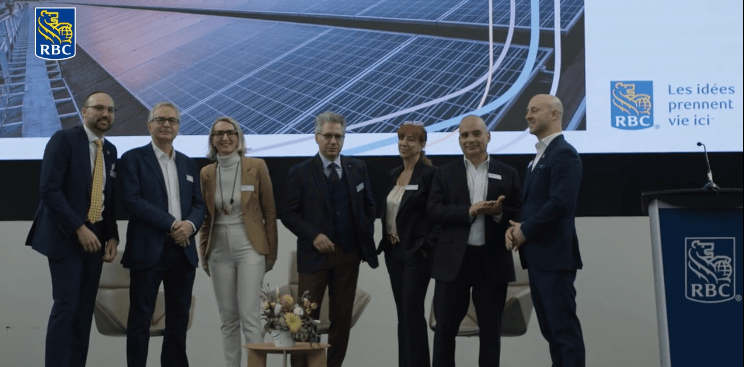
At a recent RBC roundtable, Natasha Shute, Director, RBC Climate Advisory Solutions, convened business leaders to discuss how environmental initiatives are translating into measurable business outcomes:
-
Fulya Karakas-Akgun, Sustainability Manager, Polaris Transportation Group
-
Narinder Bhogal, President, BSB Manufacturing
-
Paul Smith, Owner, Smith Gardens
The conversation revealed a clear narrative: environmental sustainability is a catalyst for innovation, efficiency and long-term resilience. Here’s how they’re turning environmental challenges into competitive advantage.
From Data to Dollars: Measuring What Matters
For many businesses, the environmental sustainability journey begins with data. What was once seen as a reporting requirement is now informing operational strategy and capital allocation.
Transportation: Turning operational data into efficiency gains
At Polaris, telematics and route intelligence have fundamentally reshaped fleet operations.
While telematics has long been used across highway assets, expanding the technology into city fleets has generated measurable improvements:
-
Route optimization projected to deliver fuel savings of up to 25%
-
Improved vehicle uptime, safety and overall fleet efficiency
-
Identification of prolonged idling patterns among a subset of drivers
Follow-up analysis linked idling behaviour to extended wait times at border crossings, where engines were kept running to maintain cab heat during inspections.
Rather than addressing the issue through policy alone, Polaris implemented a practical solution. “We enrolled in Natural Resources Canada’s Green Freight Program,” explained Karakas-Akgun, “allowing affected drivers to access incentives to install cab heaters.”
The result: reduced fuel use and emissions, improved driver comfort and safety, and stronger fleet performance.
Manufacturing: Using operational insights to inform capital allocation
At BSB Manufacturing, environmental sustainability data is guiding investment decisions at the facility level.
Recent initiatives include:
-
Upgrades to energy-efficient lighting
-
Improved heating systems
-
Expanded recycling efforts
These investments have reduced environmental impact while generating meaningful cost savings.
Closer tracking of energy use and material flows also revealed effluent waste that was effectively going down the drain. By identifying and addressing the issue, BSB converted a recurring operating expense into a recoverable resource.
Agriculture: Precision technology and input optimization
In agriculture, efficiency gains are progressively driven by precision technologies.
At Smith Gardens, the introduction of AI-enabled optical sprayers – still a relatively new technology in Canada – is helping to address rising input costs and the limited availability of crop protection chemicals.
Early results indicate:
-
40-60% reduction in chemical and fertilizer use
-
Improved cost efficiency and competitiveness as the technology is scaled across the operation
“The introduction of the technology could be just the beginning,” says Smith, underscoring how incremental investments in precision tools can unlock longer-term efficiency gains.
Key Takeaway: When embedded into operations, data can transform environmental sustainability from a cost centre into a performance lever.
Customer expectations as a competitive force
Across sectors, customers are reshaping environmental sustainability strategy, as transparency and visible performance increasingly influence procurement decisions, partnerships and market access.
As Bhogal noted, “We are operating in a new competitive reality – one where environmental sustainability isn’t a ‘nice to have’ but a core business expectation.”
Credible disclosures and visible progress are now critical to maintaining trust, relevance, and long-term customer relationships.
At Polaris, this shift is evident in procurement processes, where shippers require emissions data and reduction strategies. By embedding environmental sustainability into operations and developing a carbon calculator to quantify emissions for customers, the company has moved from reacting to requests to proactively supporting supply chain decarbonization.
In BSB Manufacturing’s experience, customer audits now routinely include environmental sustainability performance reviews. “We’ve seen procurement decisions increasingly influenced by environmental credentials,” Bhogal explains. “Companies that can demonstrate measurable progress are winning contracts that might have gone to competitors with lower initial pricing.”
This trend extends beyond individual transactions. Long-term supply chain partnerships now often include environmental sustainability targets and joint improvement roadmaps, making environmental performance a factor in strategic relationship development.
Key Takeaway: Customer expectations make environmental sustainability a competitive differentiator in winning and retaining business
Resilience as the new return on investment
While operational efficiency can create immediate returns, leaders are broadening their definition of value. Resilience – in the form of risk mitigation, continuity planning and infrastructure readiness – is becoming a central investment priority.
Climate resilience: Managing physical risk
At Smith Gardens, drip irrigation – while not new to the market – has been adopted in response to increasingly unpredictable rainfall patterns.
When irrigation is required, drip systems can reduce water usage by at least 50% compared to overhead or sprinkler systems, helping protect yields and support long-term production stability.
“Drip irrigation will be our self-insurance against drought,” explained Smith, highlighting how resilience-focused investments are being driven by operational risk management as much as environmental considerations.
Organizational resilience: Disciplined, long-term investment
For Bhogal, resilience is closely tied to disciplined capital allocation and long-term readiness. Environmental sustainability data helps identify where investments can generate both environmental benefits and durable financial returns.
This approach signals a broader shift from one-off environmental sustainability projects toward integrated, resilience-focused business planning.
Infrastructure resilience: Innovation and energy security
That same investment discipline is also shaping how leaders think about longer-term infrastructure strategy.
In 2024, Bhogal joined SolarSteam Inc. as Director of Manufacturing. The company develops solar thermal systems that replace fossil fuels in industrial processes.
As energy demand accelerates – particularly from AI-driven data centres – the company has begun applying this technology to electricity-free cooling generation and storage, helping reduce emissions while strengthening energy security. More recently, SolarSteam entered the dual-use market through NATO DIANA, extending its applications across both civilian and defence sectors.
The focus, Bhogal emphasized, is resilience through disciplined innovation – aligning decarbonization, infrastructure readiness, and long-term competitiveness.
Risk scenario planning: How Canadian businesses can prepare for what’s next
Resilience now extends beyond technology deployment to forward-looking risk management. As organizations invest in infrastructure and innovation to manage long-term uncertainty, the next step is ensuring those decisions are informed by forward-looking climate risk analysis helping businesses evaluate potential impacts before they materialize.
As Karakas-Akgun pointed out, “This kind of planning can help our business anticipate weather disruptions, infrastructure risks and insurance impacts before they affect service and costs.”
Key Takeaway: Resilience defines the new ROI, becoming the key measure of long-term business value
The Bigger Picture
Together, these stories point to a shared truth: environmental sustainability is how modern businesses help to protect margins, win customers and future-proof operations. By harnessing data, responding to customer expectations, and investing in resilience, companies are turning environmental challenges into competitive advantages.
As Karakas-Akgun put it: “What’s good for the planet is good for business – if you approach it the right way.”
Bottom Line
For Canadian businesses in 2026, that approach starts with three moves: measure what matters, respond to market signals, and invest in resilience. The companies making these moves today are building the competitive advantage that will define the next decade.
How RBC can help
The RBC Agriculture Banking & Financial Solutions team is here to help. Contact your RBC relationship manager to learn more about solutions to move your business forward.
To support clients on their journey to environmental sustainability, RBC works with Carbonhound, a climate action platform that helps companies measure and track their environmental impact. Speak to your RBC relationship manager today to learn more.
Visit: rbc.com/impact
This article is intended as general information only and is not to be relied upon as constituting legal, financial or other professional advice. A professional advisor should be consulted regarding your specific situation. Information presented is believed to be factual and up-to-date but we do not guarantee its accuracy and it should not be regarded as a complete analysis of the subjects discussed. All expressions of opinion reflect the judgment of the authors as of the date of publication and are subject to change. No endorsement of any third parties or their advice, opinions, information, products or services is expressly given or implied by Royal Bank of Canada or any of its affiliates.