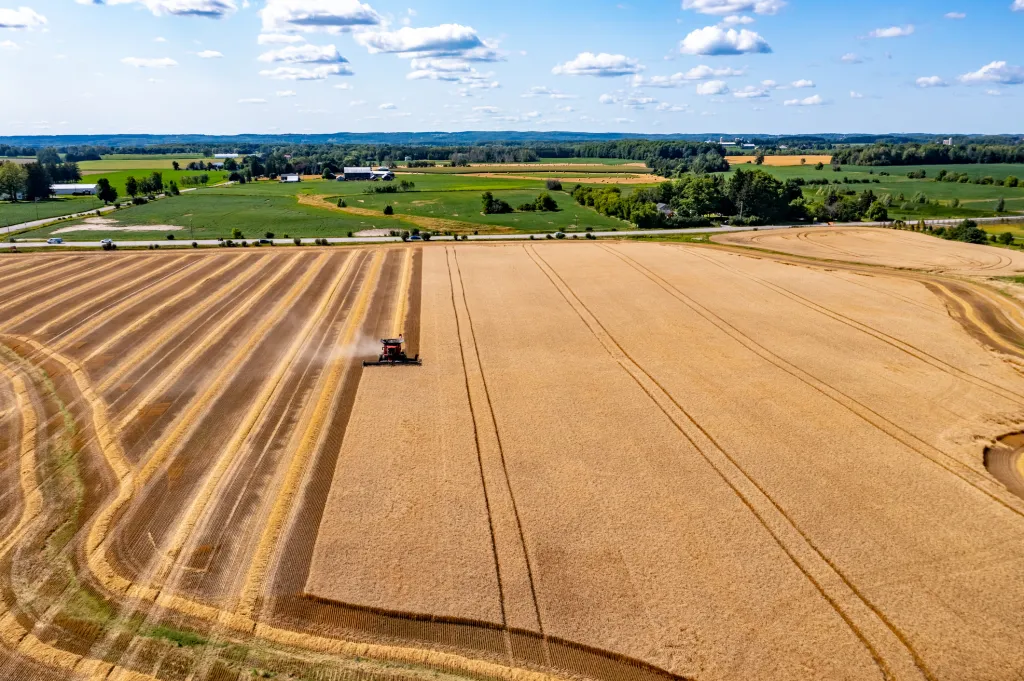


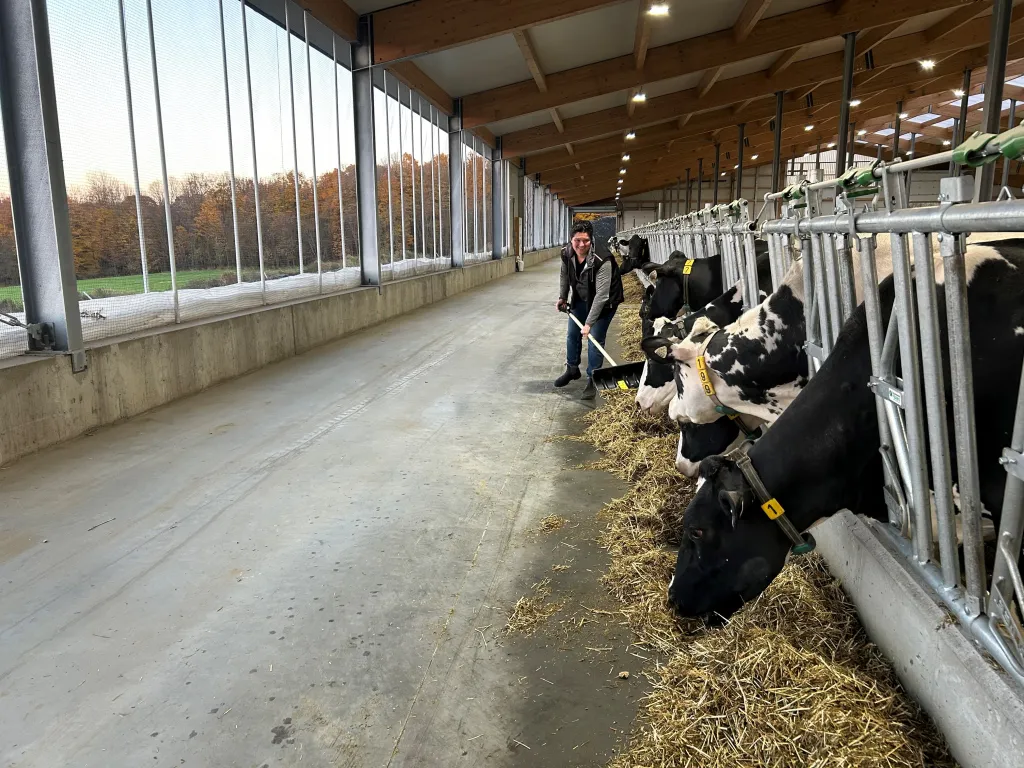
Marie-Claude Ferland is as comfortable analyzing financial statements as she is milking cows or working fields.
As Director of Credit Adjudication, Agricultural Markets at RBC, she’s spent more than two decades in agricultural banking and majority of her life on the family farm in Compton, Quebec. That experience lends itself to understanding the delicate balance between the mindset of a producer and the need for responsible financial planning.
“When I am analyzing an application or looking at a file on my computer, I never forget the real work that’s happening on the farm,” says Marie-Claude.
After earning a degree in animal science from McGill University, Marie-Claude began her career at RBC, then returned in 2019. She now reviews farm loan and credit applications for Ag clients across Southwestern Ontario, Atlantic Canada, and Quebec. In between working at RBC, Marie-Claude also spent over a decade working on the family farm.
Marie-Claude is also still actively involved with the multi-generational family farm, where she helps manage five full-time employees, supports the herd, and, of course, handles the books. If that weren’t enough, she does it all while raising four teenagers.
Marie-Claude’s lived experience helps her understand the pressures producers face from uncooperative weather and rising input costs to the allure of an available neighbouring parcel of land.
It also shapes how she supports RBC Relationship Managers in their work with clients. She strives to look beyond the farm’s history, capacity and long-term goals to ask informed questions and provide recommendations that help loan applications move from a definitive “no” to a potential “yes.”
Four financial recommendations for Canadian farm owners
As farms grow larger, more complex and increasingly multigenerational, Marie-Claude encourages producers to approach financing as an ongoing planning process, not an event that begins when papers need to be signed.
Here’s her advice to producers:
1. Start the conversation early
Even a straightforward financial request involves a great deal of preparation, review, and documentation. Ten business days is a reasonable timeline for review when everything goes smoothly, but that’s often extended when important details or required information is missing. Speak with your Relationship Manager as early as possible before committing to purchasing new land, expansion projects and major equipment purchases.
2. Know your numbers and the story behind them
In addition to keeping financial information up to date, producers should be prepared to report on both this season’s results and previous years. Providing a year-by-year account of financials, relating the story behind the numbers, and sharing any relevant insights to explain discrepancies, helps producers strengthen their loan applications and prevent delays.
3. Build a strong advisory team
Financial advisors and accountants are important, but complex farming operations also benefit from receiving coordinated advice from legal, nutrition, crop and soil specialists. When advisors collectively understand a producers’ goals and work together, both operating decisions and farm transfers are strengthened.
4. Balance today’s opportunities with tomorrow’s needs
When neighbouring land becomes available, required equipment becomes difficult to find, or additional quota becomes available, producers looking to grow their operations may feel pressured into acting quickly. But high purchase prices can lengthen the time required for new investments to pay for themselves. Before committing to major purchases or expansion, it’s important to consider whether the added cost will leave enough cash and future borrowing capacity to manage any unexpected expenses, adapt to market shifts, or fund other future farm priorities.
Teamwork on, and off, the farm
Whether at RBC or on the farm, one of the things Marie-Claude is most proud of is building strong teams. Clear areas of responsibility allow several owners and employees to contribute to the land, while at work collaboration with Ag specialists helps her understand diverse sectors and regions. Marie-Claude also keeps abreast of emerging investments, including biodigesters and other projects that are designed to reduce a farm’s environmental impact and additional cashflow.
For Marie-Claude, the most rewarding applications are those that are completed quickly and correctly, where producers can move ahead with their goals while also having a clear understanding of the farm finances.
Although her commitment to clients appears to be more behind the scenes, she still feels a strong sense of connection to her fellow producers and takes her responsibility seriously.
“A thoughtful lending relationship is about more than simply saying yes or no to an application. My goal is to help the Relationship Manager give clear, responsible advice that supports the client over the long term,” says Marie-Claude.
Start your conversation
RBC combines agricultural knowledge and a broad range of financial solutions that help producers make informed decisions and build resilient operations.
Contact RBC to arrange a meeting with your local Relationship Manager and discuss your farm goals.
This article is intended as general information only and is not to be relied upon as constituting legal, financial or other professional advice. A professional advisor should be consulted regarding your specific situation. Information presented is believed to be factual and up-to-date but we do not guarantee its accuracy and it should not be regarded as a complete analysis of the subjects discussed. All expressions of opinion reflect the judgment of the authors as of the date of publication and are subject to change. No endorsement of any third parties or their advice, opinions, information, products or services is expressly given or implied by Royal Bank of Canada or any of its affiliates.