

TLDR
Toronto fitness studio PAKT is delivering what so many gyms promise, but few actually create – real community and connection
Co-founders Chris Lewarne and Karina Vee built a cohort-based model where the same people train together over multiple weeks, forming real bonds in the process
A network of clients, friends and believers helped bring PAKT to life long before the doors opened
RBC stepped up to back PAKT when it mattered most, fueling a vision that opened in summer 2026
This is how invested Karina Vee is in her business. As the founder sale for PAKT – the Toronto-based fitness studio she co-founded with her husband, Chris Lewarne – went live, she was hunched over her laptop in the delivery room, working through a long night of labour with her first child. “This is taking forever,” she had thought at the time. “I might as well get work done.”
As the day went on, PAKT’s CFO, Daniel Rodic, pinged her with an update: the first few hundred dollars were coming in from the founder sale. Vee replied, “Hey, I’m giving birth to my son right now, we’ll get back to you.”
A baby and a business, born the same day.
For Lewarne and Vee, it was a fitting beginning. They had put everything on the line to launch PAKT, even as life kept coming at them full speed.
Two paths to the same place
Vee and Lewarne come at the fitness world from opposite directions. Vee has spent more than 12 years in it. She has taught yoga and kickboxing, served as a founding instructor at Barry’s Toronto for eight years, launched a workout app during the pandemic and run fitness retreats on the side. Wherever she went, she gathered people together.
Lewarne’s path was distinctly different. He grew up in Toronto subsidized housing and followed the road he was told to follow – work hard, keep your head down, become a good lawyer. By his late twenties, he was at a top firm in New York. On paper, it was a dream job. The problem was, he couldn’t sit at his desk for more than 35 minutes. Already feeling a mix of burnout and apathy, he was ultimately pulled off the path by the death of his good friend Adrian – a man who, at 30, “lived three lives in 30 years,” as Lewarne puts it. Every chapter of Adrian’s life had carried real meaning. Lewarne looked at his own and didn’t feel he could say the same.
After law and a few odd jobs in New York, a chance encounter with the head trainer of Barry’s Bootcamp set him on a different course entirely. He was – by his own admission – “horrible” on his first day of work there. But the experience lit a fire in him. “I loved everybody I met there,” he says. “I felt this energy inside me I hadn’t felt for a long time.”
Two years later, he was offered a role helping launch Barry’s across Canada. Back in Toronto, he ran auditions for new instructors. Vee was one of them. After a few false starts and a romance they kept under wraps, they were a couple.
The search for something more
On the surface, both Vee and Lewarne were thriving. Underneath, each was searching for something more. For Lewarne, success came at a cost. The search for meaning curdled into ego, addiction and alcoholism. The hardest part was admitting he couldn’t fix himself.
“I’d always been the person in my household and family who helps others,” he says. “It was hard to admit that somebody needed to help me. That was the most difficult thing I’ve ever had to accept.”
His former boss and mentor at Barry’s funded his rehab outright. What Lewarne learned there would, in time, become the vision for a new kind of fitness experience. “The root and ongoing cause of addiction is isolation,” he says. “Recovery is connection. Recovery is community.”
Vee’s search was running on a different track but pointing in a similar direction. After eight years at Barry’s, she wanted something that was hers – her vision, her culture, her brand and her say. She and Lewarne had been talking for years about building something together. They just hadn’t found “the thing” yet.
The idea: Community as the whole point
Then Vee found it. A New York gym was doing cohort-style training – small, fixed groups working out together twice a week with the same instructor, over multiple weeks. It was the opposite of what most modern gyms had become, even those that had promised a sense of community.
For Lewarne, it clicked instantly. The recovery principle and the business model were one and the same: a community.
Their first name for the concept was “The Pack” – a nod to the idea that wolves are stronger in a group than alone. When they discovered a U.S. brand had already taken the name, a misspelled email from a client gave them a better one: PAKT. The lawyer in Lewarne loved it. A pact is a covenant – a commitment shared by everyone in it.
The PAKT model is built around cohorts of 30 people where the same group and the same instructor train twice a week in four-week progressive blocks. The downstairs space, The Wild, is for strength and conditioning; the upstairs Den is for yoga, Pilates, recovery and mobility. The idea is that you know the people next to you, and the instructor knows everyone’s names, injuries and goals. “You get strong because you keep coming back,” Lewarne says. “People notice when you don’t show up.”
It’s also a place trainers want to be – somewhere they can teach, train and grow alongside the community they’re building. Every PAKT trainer is a partner, sharing in the revenue they help generate.
“We don’t just pay lip service to community – it’s baked into our bottom line as a business,” Lewarne says. “If people don’t want to come together and form stronger bonds, we will fail.”
The following that couldn’t help but help
PAKT was a community before the doors even opened. Lewarne and Vee’s story had a way of drawing people in – and the examples of people stepping in to help kept piling up.
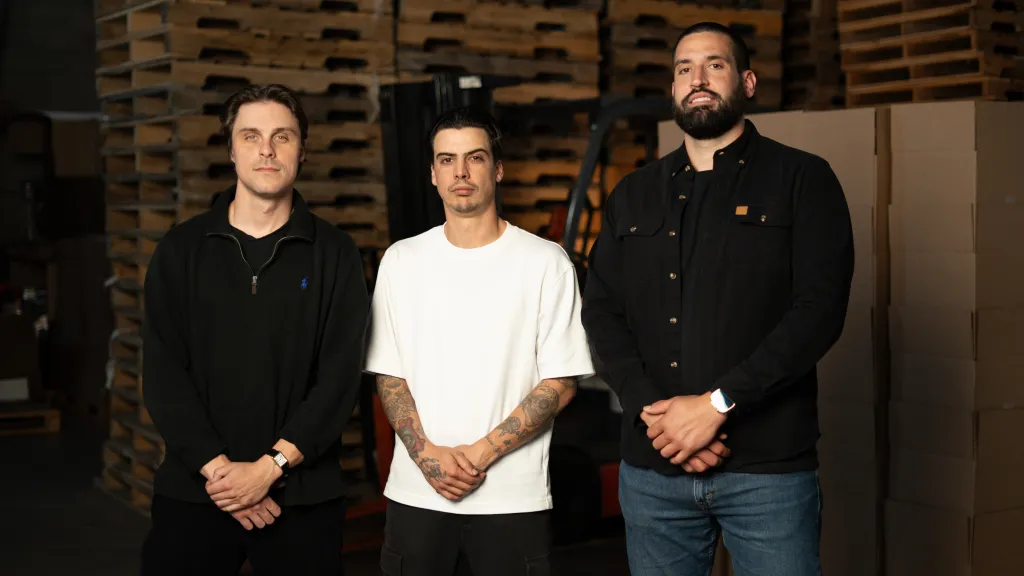
Rodic first met Lewarne and Vee as a client at Barry’s. He fell in love with their classes and the way they pulled people together. A few years ago, he took them to dinner and told them he wanted to help them build something of their own.
Then there was the landlord of the two-storey warehouse Vee had been eyeing for years – a holdout against the condo developers and a block from where she and Lewarne live. He chose them over higher bidders because he liked their story. A long-time client stepped in as guarantor on a loan. Another client – a senior wealth manager – made the introduction to RBC that would set everything that came next in motion.
Finding a bank that saw the vision
“RBC saved our lives” This is how Lewarne puts it.
By the time PAKT was looking for financing, Lewarne and Vee had already put their entire life savings – about $200,000 – into the business.
Other banks had been encouraging in conversation, but weren’t actually stepping up. Lewarne kept hearing the same message: unless you already have $500,000 sitting in liquid cash, you can’t get a $500,000 loan. As he points out, “If I had that, I wouldn’t need a loan.”
He had assumed RBC would be the quickest ‘no’ of them all. “In my mind, RBC was the biggest bank, so I figured the bar would be even higher than at other banks. I thought if it’s a no from someone else, it’s definitely a no from them.”
But Lewarne and Vee hadn’t walked in unprepared. Looking back, Lewarne credits much of the outcome to the work they did before that first conversation.
“We came in with everything – our financials, our projections, our full vision for the model – and proof there was already a community coming together here. We knew we had to make it easy for them to see what PAKT could be.”
The upfront work paid off. RBC came back with an approval, and financing came together as a term loan, a small business line of credit and a business credit card – alongside a personal investment from the founders and a handful of small equity partners.
“That day,” Lewarne says, “aside from my wedding and the birth of my son, was probably the best day of my life.”
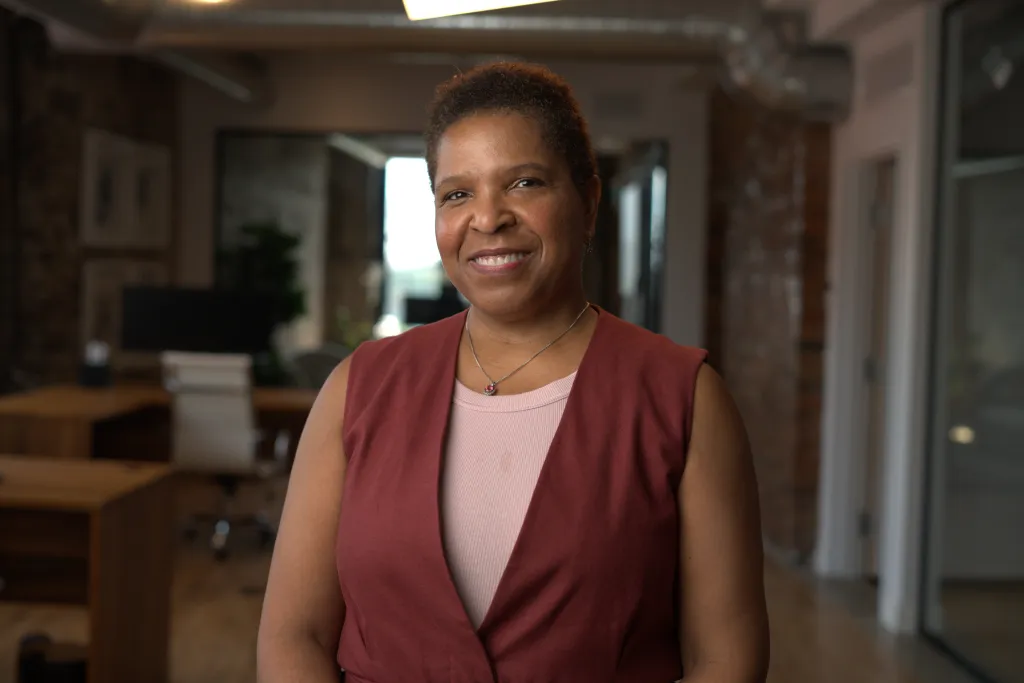
Julie Kim, RBC Relationship Manager, Business Markets and David Kim, RBC Senior Relationship Manager, Business Markets, worked directly with the PAKT team to structure their financing.
“Working with the PAKT team was a true partnership,” says Julie Kim. We focused on understanding their vision deeply – from their cohort-based model to revenue-sharing with trainers – and structured a solution that aligned with their long-term goals. Our journey wasn’t without hurdles; it took eight months from the initial discovery meeting to final loan approval, navigating complex loan structuring, refining the business plan and negotiating with our risk partner. We viewed these not as roadblocks, but as opportunities to innovate and think differently.”
She adds that the community they had already built – before even opening their doors – was a clear sign of their readiness. “When a business owner can present their vision, their commitment and the financial details so clearly, we can move beyond transactional support to strategic collaboration.”
Rodic, who has spent most of his career building tech companies on both sides of the border, knows the funding landscape well. Canadian markets, he says, are famously tough for small businesses. “RBC was the only bank that really stepped up to fund innovation,” he says. “They were very, very crucial to the success of this business.”
Just the beginning
PAKT’s doors opened in summer 2026, with cohorts now running in both The Wild and The Den. For Lewarne and Vee, the launch isn’t the finish line – it’s the start of an amazing journey.
Today, they have a son, a community, a space and a model they believe in.
What comes next is already in motion. An on-demand digital platform is in development to bring PAKT to clients outside Toronto. And, as demand for cohorts keeps climbing, the conversation has already turned into what the model could become beyond a single studio. The community keeps growing – and so does the vision.
PAKT’s success will depend on everyone in it continuing to show up – for one another and for what they’re building together.
So far, they have.
Ready to Start Your Business?
From registering your business to opening a business bank account to planning for growth, RBC is here to support you every step of the way.
This article is intended as general information only and is not to be relied upon as constituting legal, financial or other professional advice. A professional advisor should be consulted regarding your specific situation. Information presented is believed to be factual and up-to-date but we do not guarantee its accuracy and it should not be regarded as a complete analysis of the subjects discussed. All expressions of opinion reflect the judgment of the authors as of the date of publication and are subject to change. No endorsement of any third parties or their advice, opinions, information, products or services is expressly given or implied by Royal Bank of Canada or any of its affiliates.