

TLDR
-
Expanding internationally requires significant planning, particularly around regulatory timelines, working capital and operational complexity
-
Entering new markets can help companies diversify risk across geography, from weather patterns to trade dynamics and currency exposure
-
Financial tools such as accounts receivable insurance and letters of credit can help reduce risk when working with suppliers and customers across borders
-
Working with partners who understand the pace and realities of a business can help companies respond faster to new opportunities
The Company
In the Business Beyond Borders series, RBC speaks with businesses across Canada about how they are seizing opportunity in the global landscape, growing their businesses strategically and navigating the realities of expansion.
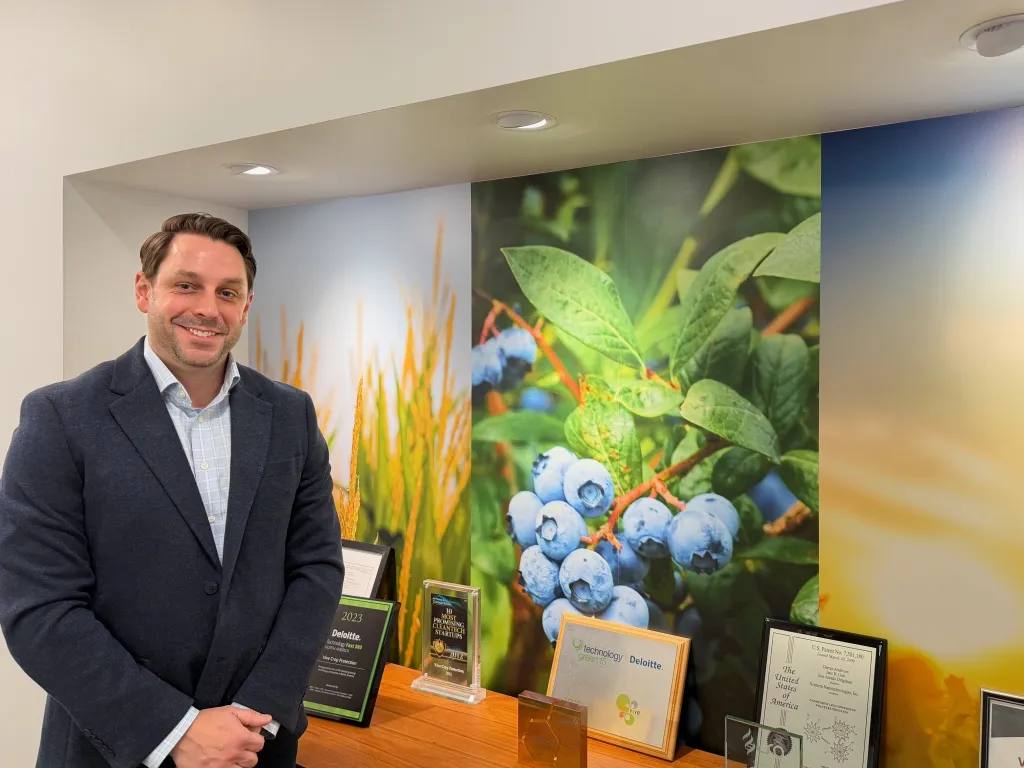
Vive Crop Protection is an agricultural technology company focused on improving how crop protection products work for farmers.
At the centre of the company’s approach is a formulation platform that enables the use of existing active ingredients in new ways. Rather than developing entirely new chemistries, Vive Crop’s nanotechnology is designed to improve the performance, handling and economics of established crop protection products.
This approach allows Vive Crop to deliver practical benefits for growers, such as improved consistency, reduced application complexity and better overall performance. All while avoiding the cost, time and regulatory burden associated with bringing new active ingredients to market.
The nanotechnology itself wasn’t originally developed for agriculture. Early applications focused on delivering advanced materials for electronics and medical devices. But the company soon realized that agriculture offered an opportunity to deploy the technology at scale, allowing Vive Crop to deliver meaningful value for growers while building a commercially viable business around its innovation.
Today, Vive Crop occupies a distinct space in the crop protection industry. Large, multinational manufacturers typically focus on blockbuster products designed to work across many crops and markets, while many biological crop protection startups struggle to scale commercially. Vive Crop aims to bridge that gap.
“Our strategy is to serve the segments that tend to be overlooked. We can create products that address specific needs for growers or crops, rather than applying a single solution across the entire market.”
— Jeff Lacrooy, Senior VP of Finance, Vive Crop Protection
The company is also exploring hybrid crop protection solutions that combine synthetic and biological ingredients—an area many in the industry see as the future of crop protection.
Why Vive Crop Launched in the U.S. Before Canada
Although Vive Crop is headquartered in Mississauga, Ontario, its commercial journey began south of the border, thanks largely to regulatory timelines.
While the company initially planned to operate in both Canada and the United States, gaining approval for its nanotechnology took longer in Canada. As a result, Vive Crop launched commercially in the U.S. several years earlier.
“We joke internally that Canada is actually our first international market,” says Lacrooy.
Building a commercial presence in the United States first ultimately strengthened the company’s foundation. The team was able to refine its go-to-market strategy, build its commercial organization and expand its product portfolio before returning to its home market.
VIVE CROP’S MARKET PRESENCE
Current State:
-
~95% of revenue from U.S. operations
-
Launched commercially in the U.S. several years before Canada
-
Building Canadian commercial presence
Forward Plan:
-
15-20% of revenue from Canada within 4-5 years
-
Continued North America expansion
-
Strategic partnerships for markets beyond North America
Now, the company is focused on growing its Canadian footprint. While approximately 95 per cent of revenue currently comes from the U.S., Vive Crop expects Canada to represent 15-20 per cent of revenue within the next four to five years.
Expanding geographically also helps diversify risk. “Different markets face different pressures at different times,” Lacrooy explains. “Exchange rates, trade dynamics, weather cycles and disease patterns can all vary. Expanding into new markets helps balance those factors.”

Strategic Advantage: Due to local regulatory delays, a U.S.-first launch became a foundation-building opportunity
How Vive Crop Stays Focused While Scaling
For Vive Crop, growth has always been tied to a clear objective: delivering measurable value for growers.
While the company’s strategy has evolved over time, Lacrooy says the leadership team works deliberately to maintain focus.
“Evolution is necessary, but distraction is optional. There are always opportunities that look attractive, but as a leadership team, we’re very intentional about defining our sandbox and determining what’s in and what’s out.”
— Jeff Lacrooy
That discipline helps ensure the company continues investing in the areas that matter most—developing differentiated products and strengthening its commercial capabilities.
Building its own commercial organization has been particularly important.
“There’s a graveyard full of companies who thought their path to market was going to be through the majors,” Lacrooy says. “Building our own commercial engine has allowed us to control our growth and reinvest in our product pipeline.”
Build vs. Partner: Vive Crop chose to build its own commercial engine rather than partner with industry majors—enabling greater control and reinvestment
Planning Years Ahead in a Long Product Cycle
One of the defining realities of the crop protection industry is timing. Bringing a new product to market can take four years or more, due to regulatory approvals and field trials. That means companies must think several years ahead when planning product development and capital needs.
“If we start working on a product today, it could take four years before it reaches the market,” says Lacrooy. “That means we spend a lot of time thinking about where we want the business to be several years from now.”
Working capital is another key consideration, as agriculture operates on long sales cycles. For its part, Vive Crop builds inventory months before the growing season and doesn’t receive payment until after growers harvest their fields and pay their distributors.
“With such long timelines,” he says, “managing working capital is critical.”
Financial tools such as trade loans, asset-based lending facilities and receivables programs, including solutions provided by RBC, can help bridge the gap between when capital is deployed and when cash is ultimately collected. Having access to that flexibility is critical in a business with long production cycles and delayed payment timelines.
THE 4-YEAR PRODUCT TIMELINE
Agriculture operates on extended cycles that demand strategic financial planning:
-
Product development → 4+ years to market
-
Inventory built → Months before season
-
Payment received → After harvest
-
Regulatory approval → Can delay seasons
Impact: “If we’re even two months late, we can miss an entire season.”
— Jeff Lacrooy
Working capital management becomes a strategic capability, not just a financial function.
Long-Horizon Planning: Four-year product development timelines require thinking several years ahead on capital needs and market positioning
Download the RBC report
Seeding Scale: Addressing Canada’s agri-food growth capital gap
Why Partnerships Matter in Business Expansion
As Lacrooy explained during the conversation, expansion hasn’t been driven by capital alone. In agriculture, timing is everything.
Products must be available when growers begin planning their crop protection programs for the season. Missing that window, even by a matter of weeks, can mean losing an entire sales cycle.
“There is a very real impact if we can’t have a product registered in time,” Lacrooy says. “If we’re even two months late, we can miss an entire season.”
That reality means companies must be able to move quickly when opportunities arise, whether securing working capital, managing trade risk or entering new markets.
Vive Crop has partnered with both RBC and Export Development Canada (EDC) to access programs that support cross-border growth at the speed and scale they require. They also worked closely with its RBCx Market team and Relationship Manager, who helped coordinate trade finance solutions and connect the company with RBC’s broader international trade expertise.
Tools such as accounts receivable insurance can help protect companies when selling to new customers internationally, while letters of credit and guarantee programs can provide reassurance to suppliers and trading partners when working across borders.
For example, letters of credit help ensure sellers receive payment once goods are shipped and contractual conditions are met, reducing risk for both sides of a transaction. Advance Payment Guarantees allow buyers to safely provide upfront payments for goods or services, while protecting those funds if contractual obligations are not fulfilled.
RBCx and RBC Relationship Manager Amy Ng worked with Vive Crop to help position them for this level of growth. Ng says, “RBC supported the company’s global expansion with tailored trade solutions, including Advance Payment Guarantees and Letters of Credit. These structures helped facilitate secure transactions with a U.S. agri-corporation, allowing Vive Crop to access advance payments, improve cash flow and pursue new growth opportunities while minimizing risk.”
“These kinds of tools give you confidence as you’re entering a new market,” Lacrooy says.
FINANCIAL TOOLS FOR CROSS-BORDER GROWTH
Vive Crop leverages:
Export Development Canada (EDC):
-
Accounts receivable insurance (protection when selling to new customers)
RBC Global Trade Specialist Team:
-
Letters of credit
-
Guarantee programs for suppliers/partners
-
Currency exposure guidance
-
Cross-border risk management
-
Proactive planning for future markets
“It’s helpful to have a team that can engage early and talk through things like currency risk or planning for future markets. Those proactive conversations make a real difference.”
— Jeff Lacrooy
The company has also worked with RBC’s Global Trade Specialist team, which provides guidance on issues such as currency exposure and cross-border risk management. Having access to a dedicated team that understands the business can help companies prepare earlier and respond faster.
“It’s helpful to have a team that can engage early and talk through things like currency risk or planning for future markets,” Lacrooy says. “Those proactive conversations make a real difference.”
For Lacrooy, the most valuable partnerships are those built on understanding. “When your partners understand the pace you’re operating at and the challenges you’re dealing with, it helps you meet critical timelines and get products to customers when they need them—not after.”
Speed Matters: In agriculture, missing a seasonal window by a couple of weeks can cost an entire sales cycle. Having responsive financial partners – and engaging them early – is critical.
Recorded in Ottawa during Feeding Innovation: Building Canada’s agriculture super power, this Disruptors special translates Lisa Ashton’s report Seeding Scale into a clear playbook for action. John Stackhouse and Lisa unpack why agri-food is “different money,” why companies hit a growth-stage financing wall, and what it takes—capital, commercialization pathways, and sector fluency—to scale agri-food innovation in Canada. Joined by Vive Crop CEO Darren Anderson and Emmertech’s Kyle Scott, the conversation connects the report’s core findings to on-the-ground reality: what breaks, what it costs, and what changes first.
The $15m Cliff: Keeping Canadian Agri-Food Startups Scaling at Home
SPEAKERS
Lisa Ashton, Darren Anderson, Kyle Scott, John Stackhouse
John Stackhouse 00:00:10
Hi, it’s John here coming to you from Ottawa to talk about agriculture. Now, I know this isn’t exactly the place you probably think about for agriculture, or for that matter, the time of year. Ottawa is frozen, and by frozen, I mean minus many double digits, and it’s hard to see any green shoots around the place even during Winterlude. But Ottawa this week is actually the very center of an important debate about Canada’s agriculture future and particularly about the kind of capital we’re going to need to grow quite literally a lot more in the years and decades ahead.
On this episode of Disruptors, we’ll hear from leading innovators as well as capital mobilizers, but I want to kick off with my colleague, Lisa Ashton, who is RBC’s Ag Policy lead, and the author of a new report on Canada’s growing challenge of capital for agriculture and particularly ag tech. The report’s called Seeding Scale. Lisa, welcome back to Disruptors.
Lisa Ashton 00:01:13
Thank you for having me.
John Stackhouse 00:01:14
What do we need to be thinking about as a country in terms of the capital that farmers and all the techies behind them are going to require in the years ahead?
Lisa Ashton 00:01:24
So over the last few months, I’ve had the opportunity to go literally coast to coast, meeting with farmers and processors in PEI and incubators in Vancouver. There’s a deep concern that we’re exporting our startups because we’re not supporting them at the growth stage.
John Stackhouse 00:01:42
Let me pause you there, Lisa, because that’s a well-known challenge in tech land that get gobbled up by American VC firms or bigger tech companies. This is actually happening in ag too. Tell us more about the ag tech companies that are getting gobbled up, particularly by the US.
Lisa Ashton 00:02:00
Certainly, so it’s not even just ag tech companies. What we’re hearing is this challenge about agri-food companies within the Canadian context. They have relatively strong support at the early stage. We have incubators, accelerators, venture firms that are really growing within the sector. But once they get to about the 15 million market-
John Stackhouse 00:02:20
Is that 15 million in capital size or revenue or something else?
Lisa Ashton 00:02:24
In injections in venture into a growing company. What that means is that those companies that are looking for Series B, Series C, Series D types of funding to grow their business, they have to start to seek foreign funds, which isn’t necessarily a bad thing. But when we think about the domestic regulatory frameworks in terms of bringing products to market and getting approvals in Canada, mixing that with the capital challenge drives companies to foreign markets so you can almost simply think about it as we’re investing in Canadian IP and then exporting that IP to benefit other countries’ productivity, job growth, and expansion of their agri-food sectors.
John Stackhouse 00:03:08
One of the things I found really interesting in your report, again, it’s called Seeding Scale, is that this was not always the case. In fact, just a decade ago in the 2010s, Canada was doing much better in terms of capitalizing ag-tech, and then it seemed to go off a cliff with the pandemic.
Lisa Ashton 00:03:26
Yes, there’s certainly a downturn in terms of growth capital across sectors. We see a 10-year low in terms of value in deal count for agri-food growing companies. Venture firms were really hot and heavy up to the 2021 peak, and we’re seeing the capital flow much slower. The sector attracted roughly 4% of growth capital over the last five years, and when you think about that in comparison to the sector’s contribution of GDP, around 7%, it’s certainly undercapitalized in that regard as well.
John Stackhouse 00:04:00
One of the other challenges I’ve seen is also the lack of knowledge in a lot of companies, whether it’s those federal agencies or VC shops, they have people who really understand software as a service, but have no understanding of how agriculture works. That’s not the case in the United States. When I get to visit VC shops in Silicon Valley, there will be an ag-tech expert who has deep subject matter expertise. Two things going on this week that we’re part of. One is a national round table with Canada’s agriculture minister, Heath MacDonald, as well as investors and operators and innovators from across the country talking about this very challenge. Also, Farm Credit Corp, a big federal agency, has its annual Future of Food conference where farm leaders and agriculture leaders from across the country get together. Maybe that’s one of the reasons it’s happening in February, not a lot to do back on the farm.
Follow us on our social media channels for more on those engagements. I think it’s worth stressing that for all the talk we’re hearing, and it’s good talk about the amount of capital Canada is going to need over the next decade to build more economic independence across the country and across all sectors. Yes, we’re talking about oil and gas and minerals and advanced manufacturing and auto and defense and space. Not enough talk about agriculture.
Lisa Ashton 00:05:27
I couldn’t agree more, John.
John Stackhouse 00:05:28
It’s probably maybe closer to 10% of the national economy, that and more of export potential. I like to say it is the one sector that stitches together every single community across this country. It’s also important to our national fabric, and it is all about technology. As we’re talking about attracting capital, retaining capital, growing capital, in all these other sectors, we got to think agriculture, agriculture, agriculture as a place where we can really scale fast. Lisa, before we get to our guests and expanding this conversation, what’s the one thing you would love Canadians to really come to grips with as we think about the year and the years ahead?
Lisa Ashton 00:06:13
I really hope that Canadians come to grips with the potential in agri-food. It’s a large exporter. It’s a key exporter for the Canadian economy, but within our regional hubs from Vancouver to PEI, it really is a driver of innovation across universities and businesses and governments. And so it really is a place for career development, but again, that investment in terms of the opportunity to grow and meet Canada’s ambitions that have been clearly laid out over the last few months.
John Stackhouse 00:06:47
Let’s hear now from a couple of amazing Canadian innovators who are on the front lines of all this and more. Darren Anderson is CEO of Vive Crop, a company building solutions that have to work in the real economy in real growing seasons. And Kyle Scott is the Managing Partner of Emmertech, a Canadian ag-tech investor who knows a thing or two about how to attract and grow those millions of dollars that we’re going to need in the years ahead for Canada to be a true ag superpower. Darren and Kyle, welcome to Disruptors.
Darren Anderson 00:07:19
Thank you for having us.
Kyle Scott 00:07:20
Thanks very much.
John Stackhouse 00:07:21
Darren, I’m going to start with you. Give us a snapshot of the vision you have for the company.
Darren Anderson 00:07:26
Sure. We make more sustainable and effective pesticides, and it’s all based on technology that was originally developed at the University of Toronto almost 20 years ago now, which is kind of crazy to say out loud. But we bring products to market that increase producer productivity, increase their profitability, increase their sustainability, primarily focused on North America and our products will be used in about three million acres this year.
John Stackhouse 00:07:48
And how big are you today?
Darren Anderson 00:07:50
We’re about 75 people. About 95% of our revenues in the US will be about 25 million in revenue in Canada this year.
John Stackhouse 00:07:59
Great story just getting going. We’ll come back to what you need to keep that going. But Kyle, tell us a bit about Emmertech.
Kyle Scott 00:08:06
Emmertech is a Canadian-based investment firm. We invest solely in agriculture companies, mainly domiciled in Canada. It’s mainly strategic egg companies, so some of the large corporates in the sector, and then a number of high-net worth farmers from across the Canadian prairies as well.
John Stackhouse 00:08:21
And Kyle, what have you needed to get Emmertech up and running and to succeed where maybe others have shied away in Canada?
Kyle Scott 00:08:29
I’m originally from Saskatchewan. Spent most of my time working out in Toronto in management, consulting and private equity with some of the largest players in Canada. I think that one of the things that I noticed then as well as now is there’s just not a lot of people who come from that space who are pursuing agriculture and agricultural opportunities. I view it as a pretty big part of my role to get more of those people interested and knowledgeable about the space to be able to bring more investors and more capital into agriculture.
John Stackhouse 00:08:58
And one of the big things, if I can call it that, that you’ve been instrumental to is a commitment this week among a range of financial institutions and capital mobilizers to get roughly a commitment for $ 4 billion of new capital. For ag-tech, this is being led by Farm Credit Corp. RBC is part of the pledge. Kyle, what were the biggest challenges in getting those commitments to this $ 4 billion?
Kyle Scott 00:09:25
Yeah, for sure. More champions in the sector and doing a better job of telling our story, I think are two of the big ones. We have some of the greatest founders in the world here, especially when it comes to agriculture. And when you speak with Canadian founders, it’s truly compelling how close they are to their end customer base. I think, John, you might’ve alluded to this earlier about how agriculture in Canada touches every community and touches everyone in the country.
And one of the things that’s starting to attract more and more capital into the sector is just having those founders out there, doing a better job of telling our story, and quite frankly, starting to have some pretty significant wins. When you look at a company like Vive, like Darren’s company, what they’ve been able to build and grow domestically from Canada has been truly amazing and it’s just getting started, and there are myriad other examples like Darren across the country.
Darren Anderson 00:10:18
Well, and I think there’s actually a unique opportunity in Canada specifically because, to put it bluntly, because we tend to operate in a more capital constrained environment, Canadian founders tend to build real companies earlier than maybe some of our competitors down south. And so I think one of the things that that means is when companies are now ready for that growth stage, they’ve built one heck of a foundation to grow off of that their competitor companies just don’t have.
Lisa Ashton 00:10:43
Darren, just quickly, what do you mean by real company? We heard from a lot of stakeholders that startups may be coming out with solutions that don’t actually solve a problem in the agri-food sector. Is that maybe what you’re referring to or is it something else?
Darren Anderson 00:10:58
There are a set of companies that, to put it bluntly, are better at selling to their balance sheet customer, to their investor set than they are at selling to real farmers and making a real difference on the farm. And those companies can often raise capital quite successfully and grow quite successfully, but those are also the ones that tend to get way out over their skis and potentially end up just not making it. And I think we’ve seen a number of those high profile failures recently. I think for a lot of Canadian companies, presuming the farmer need is there, the reality is because they’re capital constrained, they have to know how to make money out of the gate. They have to know how to generate a real demand, real value to the farmer. They have to know how they’re going to make money, and then that sets them up to be able to scale quite rapidly as they build that repeatable, predictable, scalable engine inside their companies.
John Stackhouse 00:11:49
Darren, one of the riddles I think a lot of us wrestle with is the opportunity and challenge of the United States. So you said, what was it? 95% of your revenue is now in the US, that’s great. I mean, every Canadian company needs to be almost out of the gates an exporter. The best market to start with an export strategy is the United States, despite all the concerns that we have right now, it is our ticket to scaling, but it can’t be our only ticket.
One of the challenges though that I hear about over and over and over again is that a company becomes largely beholden to the US market. Then it starts to raise Series C, D, E from US VC companies who offer sometimes more favorable terms, who have subject matter expertise, and then say, “Oh, by the way, now that we’re taking a material share in your company, we’d like you to move to Austin or Silicon Valley or wherever they see the opportunity to scale there because you’re in a bigger ecosystem.” Walk us through how Vive is navigating those currents.
Darren Anderson 00:12:53
Yeah, we’ve been fortunate in that our shareholder base is still very much dominated by Canadians. We haven’t had some of the pressures that you’ve been talking about.
John Stackhouse 00:13:02
95% of your revenue in the US, 80% of your capital in Canada.
Darren Anderson 00:13:06
Correct. And I mean, there are many issues with that. I’m incredibly passionate about bringing our tools to Canadian growers, and if you think about it, 80% of our capital is coming from Canadian capital pools effectively to help US growers out compete Canadian growers because the US growers have our tools and the Canadian growers do not. I don’t think that’s what any of us want to be happening, but if we look at our next stage of growth, there is no growth stage capital in Canada for companies like ours, almost nothing. What FCC is doing is incredible and has the potential to be incredibly catalytic, but before they came along, there was almost nothing as far as growth stage capital.
And so for us, the next stage of growth was going to have to be in the US or in Europe or in Brazil where you have these major funds that have the agricultural expertise that you all talked about and know what it takes to build a company. And I worry about taking capital from those types of organizations and having them say, “Yeah, I understand it’s awesome that you’re a Canadian company, but why don’t you look at moving?”
John Stackhouse 00:14:04
But we can fix that. Kyle, I’m looking at you.
Kyle Scott 00:14:08
Yeah, it’s a bit of a funny problem. Up here, we do really, really well with early stage financing. The problem is that we’re one of the larger ag tech investors in the country, and we can’t go in when Darren or some other companies that we know quite well across the country are looking to raise 30, 40, 50 million dollars. That’s an entirely new snack bracket and requires an entirely different fund structure to be able to participate in. So in Canada, it’s once you hit that growth stage that there’s really, really a significant lack of capital. This year, two of our other companies as well have gone out and successfully raised $ 30 million plus rounds, and almost all of the capital and certainly the lead investors from those have come from either Europe to US or elsewhere, not domiciled in Canada.
John Stackhouse 0 00:14:56
What on the corporate side, Lisa, do we need to ensure that the value chain, as it’s called, is investing in farmers and ag tech companies?
Lisa Ashton 00:15:04
There are a few movements that are happening currently in the agri-food ecosystem, particularly the Canadian Food Innovation Network has designed a program that is specifically for connecting corporates to early stage founders. This is mutually beneficial so that food retailers, for example, can actually see what’s coming down the pipeline, seeing what kinds of food innovations or food products are being developed, and then it provides the startups with early access to their potential buyers, their potential exit, or their potential collaborator across the supply chain.
Kyle Scott 00:15:43
Yeah, one of the things that we definitely see is more and more productive corporate engagement when they’re participating with funds. Either as an investor in a fund that then invests in companies or alongside into the company, there’s quite a few examples, fairly well known, that when a corporate gets too involved and has too much control directly of a company, it can go pretty sideways pretty quickly for the founders. There’s some different mechanisms to get more involvement, and I think what Lisa was referring to there, the corporate participation, if we could see an elevated level of that working alongside more of the investors in Canada, I think that that’d be super, super helpful.
John Stackhouse 00:16:27
Kyle, take us through the typical journey of a growth company. As you’re saying, there’s plenty of early stage capital from folks like you. Get to $ 15 million valuation, you’re fine in Canada. Now we may have public sector entities like FCC and BDC that would help bridge the valley of death as it’s known. But with all due respect to those organizations, they tend not to be cutting edge on a global platform to help companies get to that unicorn status. What should we be thinking about as a country to ensure that we do have that sophisticated, savvy, globally relevant growth capital operation that firms like Vive can work towards as they get through the valley of death?
Kyle Scott 00:17:14
Holy smokes. It’s a tough nut to crack, and one of the things I’ll say about the Crown Corporation, specifically EDC, BDC, and FCC, they’re an interesting participant in the ecosystem because I firmly believe that they want to be helpful and they will follow another investor into an investment, but they will not lead an investment. And so the challenge you run into is that those groups are there to participate. They are not there to solely carry the torch for a company going forward. So without someone to match or someone else to lead, that tool stays in the tool belt and can’t be used. So that becomes one of the challenges with those groups. The broader point about how do we create more globally relevant larger growth stage ag-tech investors. To be perfectly honest with you, it’s one that I’m trying to fix right now. It’s a gap that we’ve clearly identified as we’ve invested in early stage companies and they’ve grown up.
One of the number one places for us to be able to go is our Canadian financial institutions and our Canadian agriculture corporations who really, really care about the sector. And so for us, it becomes much like when our founders go out to raise capital, it becomes being able to tell the story, show why this sector is important, and because you are investing in financial assets, show why you’re able to make money doing it. To tell those three parts of the story to people who are unfamiliar with the sector takes time, it takes resilience, and it takes on your investor side, someone willing to take the leap with you and put money to work in the sector.
John Stackhouse 00:18:47
One of the challenges there I suspect is just exposure. It’s knowledge. If you go into any financial institution or large investment operation, likely they have experts in life sciences and health tech. Increasingly, I suspect there will be that expertise in defense tech because that’s the hot hot thing now with tens of billions of dollars of new NATO commitment coming to the fore. And then there’s poor old agriculture, our original growth sector where we just take it for granted, but don’t have that expertise in probably the large pension funds, but other large institutional investors as well.
Kyle Scott 00:19:23
Yeah. To your point about the institutional knowledge around agriculture, it’s funny. I say this pretty frequently. It’s nice for agriculture that it hasn’t been, and I say this lovingly, co-opted by the MBA mentality. I’m an MBA, so I get to say that. But the downside of it is that a lot of the folks who rise up into those roles and come from there, they just don’t know the sector. I think that one of the challenges there is more fundamental and goes back to how do we make agriculture a cool, interesting industry for more folks who are passionate about finance, passionate about investing to be able to come in and actually drive those outcomes.
John Stackhouse 00:20:00
Make agriculture cool again. I’ll let people play with that, especially in MBA schools for all the MBA deans listening.
Lisa Ashton 00:20:11
Darren, you raised a really interesting point that beyond just the growth capital challenge, there’s a number of other factors to why you’ve seen your markets grow in the US much faster than Canada. In our report, we looked at the three Cs beyond capital, and one of those is competitiveness. Would love to hear your view on that and why you’re seeing those factors lead you to a market growth in the US relative to Canada.
Darren Anderson 00:20:37
I do think for any Canadian agri-tech company, they’re going to have to be looking at the US as a market, but unlike in almost every other sector where the US is 10 times the size of the Canadian market, in most areas in agriculture, you’re looking at being something like a third. So the question is just how do you capitalize on them? So as you noted, we started selling in the US in 2016 when we received our first regulatory approval. We received our first regulatory approval in Canada in 2023. We have 11 products approved for use in the US right now. We have one product approved for use in Canada.
John Stackhouse 00:21:08
Darren, let’s pause for a second there. You’re saying that you’ve had one regulatory approval in Canada, 11 in the US. If Team Canada loses 11 to one to Team USA, it will be a national crisis. We got to come to grips with that. Give us a sense of the quick changes that you would like to see happen this year to allow us not to lose 11 to one, but actually maybe win 11 to one.
Darren Anderson 00:21:33
I’ve got one big swing, and then one small swing, if you’ll permit me. On the big swing, I think there’s an opportunity for Canada to target a culture of reciprocity, reciprocal recognition of regulatory approvals from other countries. Now that wouldn’t be in all cases, right? But default is that if something’s been approved in Australia or if it’s been approved in the US, it should be a faster path to be able to bring those products to market here in Canada. That would be one change. It’s a big one, but it is doable and it is something that I’d like to see our trade representatives focused on. The smaller ask is, if you think about, we’re spending so much time right now talking about “buy Canadian,” what about “regulate Canadian?” Canadian domestic companies, front of the line for regulatory approvals.
John Stackhouse 00:22:17
Seems easy. Kyle?
Kyle Scott 00:22:19
We often say capital’s like water, it’ll find the path of least resistance to the largest ROI. And so removing some of those regulatory burdens and regulatory pathways that allow our companies to scale and commercialize rapidly would be hugely beneficial to attracting more capital to the sector.
John Stackhouse 00:22:35
Yeah, capital is like water. There is no shortage of capital in the world, no shortage of capital in Canada actually, but a lot of it is flowing to the US because of those opportunities. Even over the last 12 months, capital has been flowing fairly assertively to the US because of the opportunities there, including in ag-tech, which we know is so critical to the country. We know what the challenges are, but let’s also think of the opportunities. We are hearing more interesting Canada from around the world, across all sectors.
I actually got to spend time with a European investor who, the firm’s been around for 400 years. They said, “We have 50 year strategic plans and we review them once every five years. And we’ve just gone through a review and we’re actually really interested in Canada and we’re really interested in Canadian agriculture because when we think about all that the world is going to need over the next 50 years, food is going to be one of the big needs. So we are looking for investible opportunities in Canada right through the value chain over the long haul.”
Darren, give us a macro view of what you’re seeing out there in the world and help us understand what we can do to bring more of those opportunities to Canada.
Darren Anderson 00:23:57
The way we view the world right now is there are a massive number of companies out there that would be really, really interesting targets for us to go acquire. We’re actually actively in market right now looking at a number of those targets where we can bring them in house, take advantage of our distribution network, our technology, and build that unicorn right here in Canada. Canadian companies, because they tend to be capital constrained, are good companies. These companies have solid foundations and those are amazing foundations to build off of whether you’re looking at organic or inorganic growth, and I think given the overall market conditions right now, it’s an amazing opportunity to be building something like this in Canada.
John Stackhouse 00:24:36
As we move towards close, I want to take that big picture idea forward. Our research at RBC shows, Lisa, I think we can grow our exports by at least 20% by the end of this decade. That’s our moonshot as a country, and it isn’t just producing more at the farm level. It’s developing lots of technologies right through the value chain of agri-food production so that we can be more competitive here at home, reduce food costs for everyone, but also make ourselves more relevant in an increasingly competitive global market that is going to need lots more food. Kyle, what’s the one thing we as a country need to come to grips with this year in 2026 to get that payoff by 2030?
Kyle Scott 00:25:22
I’m going to cheat and say that there’s two things that I’m thinking about. The first one is working with international partners, attracting more FDI into the country, investing alongside in our companies with knowledgeable investors who can help us export to other markets is critical. So whenever we hear there are other investors passionate about investing in Canada, I think it’s wonderful. The second thing I would say is there’s a lot of ag infrastructure that is due for an upgrade where we can leverage some new technologies as well to become a more reliable, not only producer, but trade partner and exporter.
John Stackhouse 00:25:56
That’s a really interesting point about export infrastructure. Darren, what are the one or two things you would suggest we come to grips with this year for that 2030 payoff?
Darren Anderson 00:26:05
I want to see the FCC capital commitment and the capital commitment by groups like RBC and Emmertech land successfully. I actually think that that is an absolutely transformative and catalytic event for the ag-tech space here in Canada. I think it has the scale that’s coming behind it and the ability for it to have an impact across the entire ecosystem is incredible, and I think making sure that we follow through on those commitments would honestly be the single most transformative thing this year. The nice thing is it’s already underway.
John Stackhouse 00:26:36
Lisa, as we wrap up, seeding scale has so many ideas in it. What are one or two that you want to leave us thinking about?
Lisa Ashton 00:26:44
Darren, you brought up unicorns. When we looked around the world, we looked at China, the US, India, they have stables full of unicorns. The UK, Australia, even Ireland, more countries that we would consider our peers have examples of unicorns in the agri-food sector. Canada has none. So these unicorns, they’re privately held startup companies that are building revenues of over a million dollars per year. And I think building some unicorns in Canada should certainly be a moonshot for Canadians to be thinking of.
John Stackhouse 00:27:17
Yeah, we really should have the Shopify of ag-tech.
Lisa Ashton 00:27:20
Absolutely.
John Stackhouse 00:27:21
There’s no reason that Canada can’t. We just need to continue to scale what we’re doing. Thank you all for being part of that scaling story and for being on Disruptors.
Kyle Scott 00:27:31
Thanks so much for having us.
Darren Anderson 00:27:32
Thank you.
John Stackhouse 00:27:35
Before we go, if there’s a through line from today, it’s that this is a solvable design problem. Canada has the land, the operators, the science, and the entrepreneurs. The work now is alignment, capital that fits agri-food realities, pathways that prove adoption in the real world, and the confidence to build value add here at home. Lisa, your report, Seeding Scale, how can people find it?
Lisa Ashton 00:28:02
It’s live now. Please visit rbc.com/thoughtleadership. It’s part of our growth project where we’re really focusing on key levers within the Canadian economy that can help us achieve our national growth ambitions.
John Stackhouse 00:28:17
If you found this episode useful, please follow Disruptors wherever you listen. Better still leave a rating and share it with someone who’s building or funding what comes next.
I’m John Stackhouse, thanks for listening.
Lessons for Companies Entering New Markets
As the conversation turned to advice for other businesses, Lacrooy pointed to several lessons companies should keep in mind when expanding internationally.
1. Understand Your Capital Requirements
Growth across borders often requires more working capital than expected. Inventory, receivables, regulatory approvals and market development all create new financial demands.
“Those costs can add up quickly,” Lacrooy says. “Companies need to plan for that earlier than they might expect.”
2. Build Strong Local Partnerships
Entering a new market requires expertise in regulation, distribution and customer relationships.
“It’s difficult to build that knowledge from scratch,” Lacrooy says. “Having strong local partners and trusted advisors makes a big difference.”
3. Use the Ecosystem Available to You
Canada offers a range of tools and programs designed to help companies expand internationally – from Export Development Canada (EDC) trade insurance and guarantee programs to trade financing solutions provided through Canadian financial institutions.
“These tools can reduce risk and give companies more confidence as they grow into new markets,” Lacrooy says.
4. Plan for Operational Complexity
Currency exposure, logistics, tariffs and regulatory requirements can all create friction if they’re not addressed early.
“Understanding those factors upfront allows you to plan around them rather than reacting later,” he says.
4 Lessons Vive Crop Learned About Expanding Across Borders
-
Plan capital needs early: International growth often requires more working capital than expected.
-
Build your commercial engine: Owning your route to market can create long-term resilience.
-
Use tools that reduce cross-border risk: Solutions such as AR insurance and letters of credit can help companies expand with confidence.
-
Work with partners who understand your business: Experienced financial and trade partners can help companies navigate complexity and move quickly when opportunities arise.
Preparing for the Next Phase of Growth
For now, Vive Crop remains focused on strengthening its presence in North America.
The company sees significant opportunity to expand within the U.S. while continuing to build its Canadian footprint. While international expansion beyond North America is possible in the future, Lacrooy says it would likely come through strategic partnerships rather than building entirely new commercial organizations.
In the near term, the priority is establishing a strong foundation in Canada.
“We’re still very early in the Canadian market,” Lacrooy says. “We want to get a solid footing here and continue to grow before we look further abroad.”
That measured approach reflects a broader philosophy that has shaped Vive Crop’s growth from the beginning: balancing long-term ambition with disciplined execution.
Disciplined Focus: Evolution is necessary, but distraction is optional—intentional sandbox definition drives sustainable growth
How Vive Crop Stays Grounded While Growing
For companies navigating expansion, Lacrooy believes the key is finding the right balance between planning for the future and supporting the business today.
Developing new products, entering new markets and managing capital requirements all take time—often years. That means leaders must constantly weigh return on investment, timing and available resources.
“It all comes down to balancing ROI, payback, timing and capital requirements,” he says. “You want to keep yourself grounded while still growing.”
For Vive Crop, that balance—between ambition and discipline, growth and focus—continues to shape the company’s path forward as it expands across North America.
“When your partners understand the pace you’re operating at and the challenges you’re dealing with, it helps you meet critical timelines and get products to customers when they need them—not after.”
— Jeff Lacrooy
Your Business Is Going Places. Where To Next?
Whether you’re thinking about going global or have already started to trade internationally, RBC Trade Specialists can help you make informed decisions as you expand into new markets.
Connect with an RBC Trade Specialist or contact your RBC Relationship Manager.
Visit the RBC International Trade site for market intelligence, resources and tools to help you grow internationally.
This article is intended as general information only and is not to be relied upon as constituting legal, financial or other professional advice. A professional advisor should be consulted regarding your specific situation. Information presented is believed to be factual and up-to-date but we do not guarantee its accuracy and it should not be regarded as a complete analysis of the subjects discussed. All expressions of opinion reflect the judgment of the authors as of the date of publication and are subject to change. No endorsement of any third parties or their advice, opinions, information, products or services is expressly given or implied by Royal Bank of Canada or any of its affiliates.