



In today’s digital job market, opportunity often goes hand in hand with the need to stay informed. Cyber criminals target job seekers with sophisticated scams – posing as recruiters, creating fake company websites, or advertising “dream jobs” that vanish as soon as you share personal details. These scams can lead to lost time or money, or even to identity theft. Here’s how to recognize job scams, protect yourself, and keep your job search moving in the right direction.
What is a job scam and how does it work?
You receive an unsolicited message from someone claiming to be a recruiter from a company or employment agency. The sender promotes a flexible position with minimal work hours and a high salary. The message prompts you to click a link or reply, further engaging you to provide confidential information or download malicious software onto your device.
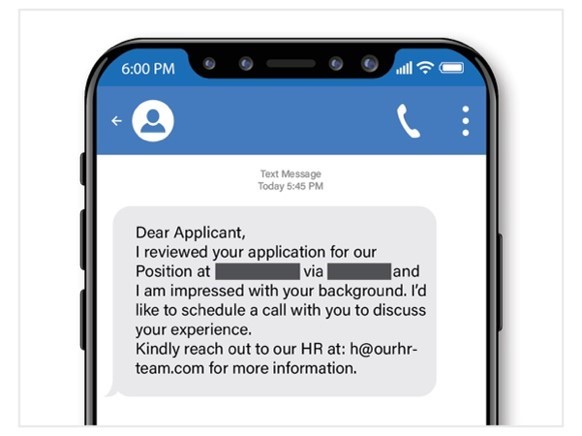
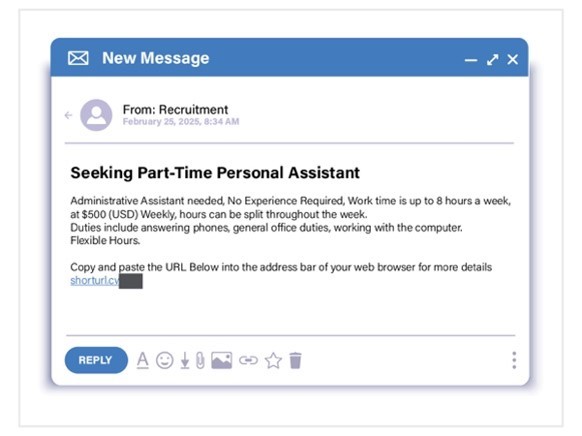
Warning – this is a job scam!
Job scams occur when fraudsters pose as employers or recruiters to deceive applicants. Their objectives typically include:
-
Identity theft: Extracting sensitive information (i.e. Social Insurance Numbers, bank details).
-
Financial fraud: Convincing victims to pay fake fees (i.e. for “training costs” or “background checks”).
These scams often involve enticing offers promoted through job boards, social media or unsolicited emails or text messages. The goal? To steal your identity, money or both.
Job scam warning signs to watch for
Spotting a scam early can save you money, time and trouble. Keep an eye out for these warning signs:
-
Too-good-to-be-true offers: High pay for minimal work and no experience required? If it sounds unrealistic, it probably is.
-
Unsolicited offers: An email out of the blue about a “perfect role” you never applied for is often a sign that something isn’t right.
-
Poor grammar or branding: Legitimate companies proofread. Typos, strange logos, or unprofessional email addresses are major red flags.
-
Upfront payment requests: A real employer will never ask you to pay for training, equipment, or background checks.
-
Pressure tactics: Scammers rush you into decisions with phrases like “Act now – this offer won’t last!”
-
Vague job descriptions: If the role lacks clear details about responsibilities or the company, it’s a potential scam.
How to stay safe while job hunting online
Staying safe is easier than you think by using these tips:
-
Don’t reply: If you receive a message you think might be a scam, report the message, block the sender, and delete the communication.
-
Don’t click: Make it a habit to never click on a link or attachment if you can’t confirm with certainty who’s contacting you.
-
Never share sensitive info: Never share personal or financial information – such as your Social Insurance Number or bank details – upfront. Legitimate employers ask for this after hiring you – and through secure channels.
-
Research thoroughly: Investigate job opportunities through trusted platforms and contact the company directly through official channels to verify the recruiter’s identity.
-
Use secure application platforms: Apply directly via company career pages or trusted recruitment portals.
What to do if you’ve been affected by a job scam
Fallen for a scam? Don’t worry, you’re not alone. Here’s what to do if you’ve experienced fraud:
-
-
Report the incident: Notify your bank, credit reporting agencies, and the job platform or hiring company.
-
Scan your devices: If you clicked on a link or attachment, it’s a good idea to run an antivirus scan to check for malicious software.
-
Change your passwords: Update passwords for any accounts that might be compromised.
-
Lock down your credit: If you shared personal information with the scammer, it’s a good idea to place a fraud alert on your credit report.
-
Lock or cancel your credit card: If you inadvertently provided the scammer with your credit or debit card information, immediately lock and then cancel your card.
-
Alert others: Warn friends and family so they don’t fall for the same scam.
-
Job scams are frustrating, but knowing the red flags and taking proactive steps can keep you safe. Remember: A legitimate job opportunity should empower you, not stress you out. Trust your instincts, take your time, and focus on the opportunities that are genuinely right for you.
For more tips on keeping yourself and data safe against common scams, read the
This article is intended as general information only and is not to be relied upon as constituting legal, financial or other professional advice. A professional advisor should be consulted regarding your specific situation. Information presented is believed to be factual and up-to-date but we do not guarantee its accuracy and it should not be regarded as a complete analysis of the subjects discussed. All expressions of opinion reflect the judgment of the authors as of the date of publication and are subject to change. No endorsement of any third parties or their advice, opinions, information, products or services is expressly given or implied by Royal Bank of Canada or any of its affiliates.