

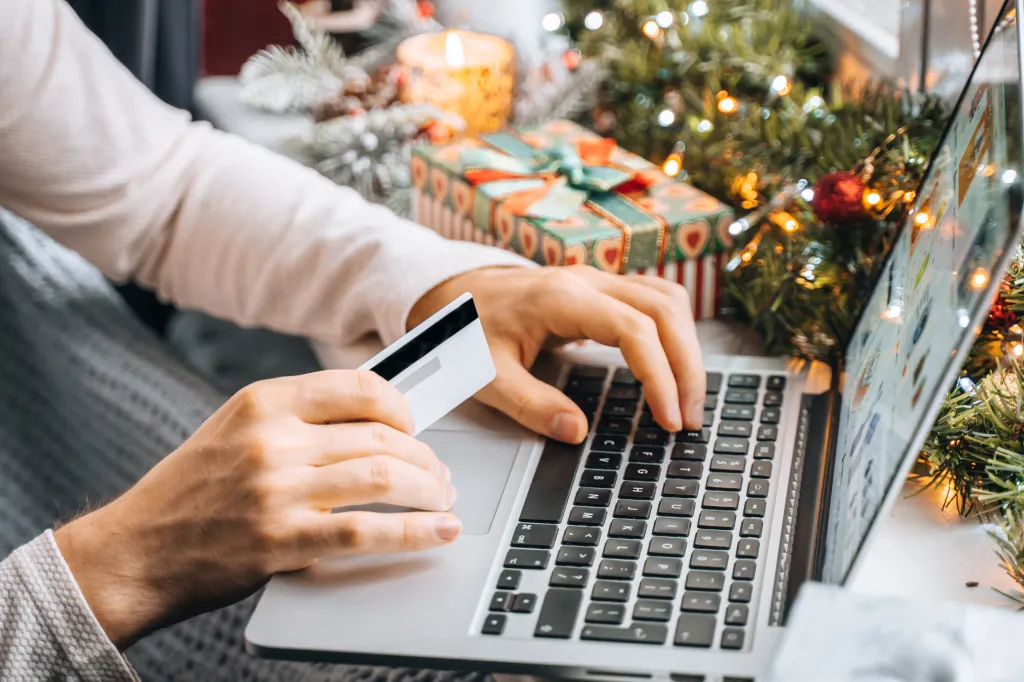
For many, the holidays are a joyful time. They’re a chance to connect with loved ones, take time off work, and even open up a gift or two. However, it’s also the time of year when online scams spike. So, between rotating holiday hits and checking your list (twice), it’s a good idea to stay alert to anyone looking to turn the season of giving into a season of taking.
Why online fraud increases during the holiday season
Why the surge during this time of year? Here are a few key reasons:
-
People are spending more: Economic activity tends to go up during the months of November and December – from buying gifts for loved ones to booking travel to charity donations.
-
More stress and distractions: The holidays can be a stressful time for many, as they are wrapping up work, making travel plans, and buying last-minute gifts. This kind of frenzy makes people more distracted and less vigilant.
-
The spirit of giving: The holidays are synonymous with generosity, and many feel inspired to give back. This means an increase in charitable donations and a general desire to help others.
Scammers are aware of these holiday trends and see an opportunity to take advantage. Moreover, digital communications from legitimate retailers soar during the holidays, making it easier for scammers to blend in amongst the barrage of messages.
The role of Artificial Intelligence (AI)
AI is having a profound effect on society – including the efficiency of online scams. Scammers are increasingly making use of AI to help them reach their goals, using the technology to:
-
Help write email and text message scams that are hyper-convincing, often matching the brand’s style and tone.
-
Make use of publicly available data (such as social media accounts) to create personalized messages, further boosting their believability.
-
Use voice cloning and deepfake videos to impersonate loved ones, business executives, or public figures.
As scammers leverage AI to create online scams that are increasingly believable and hard to spot, it’s important to be vigilant, especially at this time of year.
Five holiday scams to watch out for
Holiday scams are nothing new, but they remain effective year after year. Here are five online scams that tend to pop up during the holidays:
Fake charities
How it works: Scammers exploit the holiday spirit by asking for donations that tug on the heartstrings. They may impersonate real charities or pretend to be a charity that doesn’t exist, often using emotional stories or images tied to recent conflicts or disasters.
How to protect yourself: It’s best to do your own research to confirm it’s a registered charity. If you’re inclined to give, look up the charity, visit its website, and check for anything that looks off. Lean towards secure payment methods – like cheque or credit card – and be wary of messages that create a sense of urgency. When in doubt, you can also check whether the charity exists on other established charity management and fundraising platforms.
Online order phishing emails and texts
How it works: Have you ever received a suspicious text message or email asking you to click a link to confirm payment or delivery from a shipping company? This is a common phishing tactic. Clicking the link can sometimes install malware on your device or prompt you to disclose personal information. As scammers know that many people are waiting for deliveries over the holidays, this can be an extremely effective tactic.
How to protect yourself: The goal of these messages is to convince you that they’re coming from a reputable organization. But take a close look at who it’s really coming from and note the URL it’s asking you to click. These text messages will often come from an overly long phone number, sometimes coupled with an unfamiliar area code. Spelling errors and shortened URLs are also red flags. If you want to securely check on the status of a delivery, always go to the official website of the business.
Romance scams
How it works: Let’s face it. The holidays can be a lonely time, and some people may be looking for love. But it’s worth being careful where you look. Scammers often create fake dating profiles to lure in lonely, unsuspecting singles, starting with affectionate messages to build trust. Once that trust is established, they invent a holiday-related “emergency” and ask for money. After the transfer is made, they disappear – along with your funds.
How to protect yourself: It’s wise to stay a little skeptical of online relationships, especially if you’ve never met in-person. Avoid sending money or sharing personal information with someone you only know online, no matter how genuine their messages may seem. Any monetary request via cryptocurrency is a major red flag, as that type of transfer is difficult to trace. If something feels off, do a quick search to see what kind of internet presence the person has – or doesn’t have.
Fake websites and counterfeit goods
How it works: Scammers have become quite sophisticated at creating fake websites that impersonate real brands. With the help of AI, these sites look increasingly authentic – from logos to product listings. Their goal is to lure shoppers with too-good-to-be-true pricing, collect payment, and then disappear. In some cases, you may receive a cheap, counterfeit version of the good you ordered.
How to protect yourself: Be as observant as possible when on the website. Look for misspelled words, poor grammar, and blurry images. A lack of contact information – or being unable to pay by credit card – is another warning sign. Always examine the URL for extra words or symbols. And remember: if a price seems too good to be true, it probably is.
Gift cards
How it works: Fraudsters often tamper with physical gift cards at the store before they’re even purchased by someone. They’ll open the packaging, note the gift card number and PIN, then reseal them. Once the card is purchased and activated, the scammer drains the funds remotely before the buyer has the chance to use them. In other cases, scammers ask victims to pay with gift cards, since they’re nearly impossible to trace.
How to protect yourself: Inspect gift cards carefully before buying, and, when possible, choose ones stored securely behind the counter. To avoid tampering altogether, opt for digital gift cards purchased directly from a retailer’s website. Be cautious of anyone requesting payment by gift card – that’s almost always a scam. Finally, beware of messaging claiming that you’ve won a free gift card. These are often phishing attempts designed to install malware on your device or steal your personal information.
The holiday season should be a time to unwind and celebrate with family and friends – not to worry about scams. By staying alert and trusting your instincts, you can keep the season joyful. If something doesn’t feel right, it’s worth taking a second look before you click and buy.
Stay informed about any new or ongoing scams by checking RBC Scam Alerts.
This article is intended as general information only and is not to be relied upon as constituting legal, financial or other professional advice. A professional advisor should be consulted regarding your specific situation. Information presented is believed to be factual and up-to-date but we do not guarantee its accuracy and it should not be regarded as a complete analysis of the subjects discussed. All expressions of opinion reflect the judgment of the authors as of the date of publication and are subject to change. No endorsement of any third parties or their advice, opinions, information, products or services is expressly given or implied by Royal Bank of Canada or any of its affiliates.